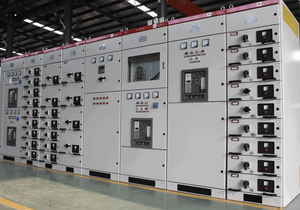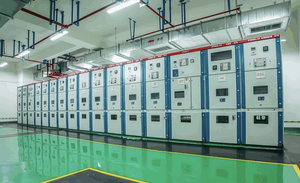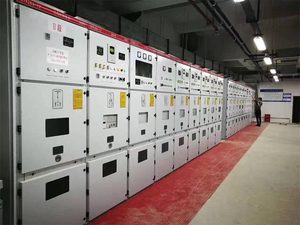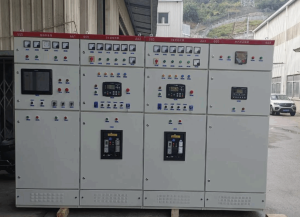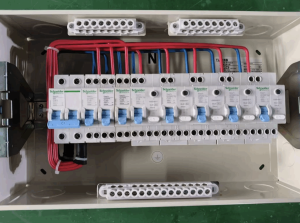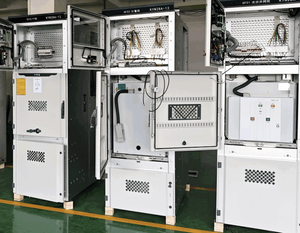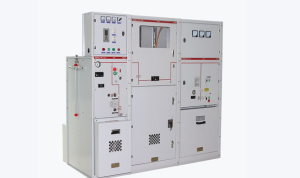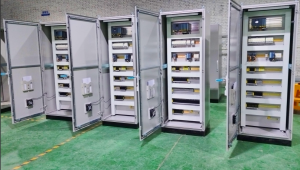
Widely deployed in industrial power distribution, municipal power systems, commercial buildings, and small-to-medium substation facilities, metal-enclosed switchgear serves as the core fundamental equipment for power transmission, control, protection, and isolation. Featuring a standardized fully enclosed metal structure, stable operational performance, moderate cost, and convenient maintenance, this equipment covers low and medium voltage distribution scenarios from 1kV to 38kV and is a key product for power engineering selection, equipment procurement, and daily operation and maintenance.
This article comprehensively elaborates on the structural characteristics, technical parameters, classification, advantages and limitations, applicable scenarios, selection criteria, and maintenance specifications of metal-enclosed switchgear.
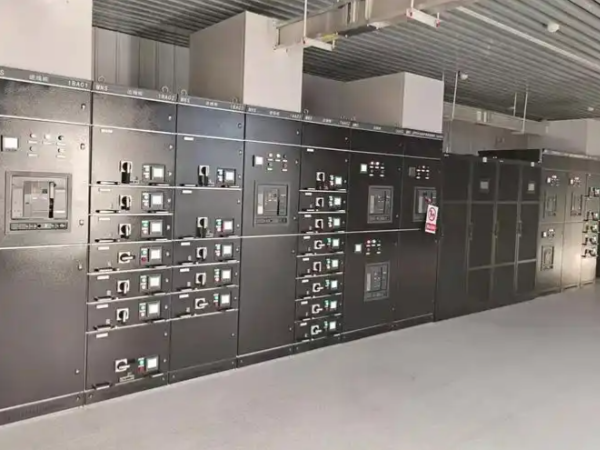
1. What Is Metal-Enclosed Switchgear?
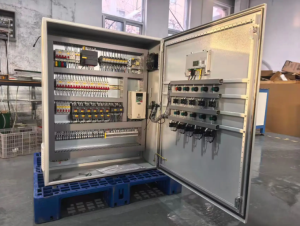
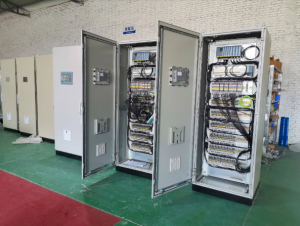
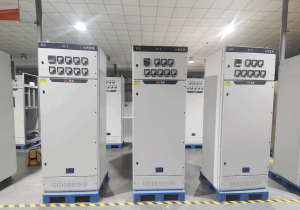
Metal-enclosed switchgear refers to a complete set of distribution switchgear fully enclosed by a grounded metal housing, integrating switching, protection, measurement, and isolation functions. All live components are completely enclosed and protected by the metal shell, which effectively isolates external dust, moisture, debris, and accidental human contact risks, making it suitable for various indoor and outdoor power distribution conditions.
Defined by industry standards, metal-enclosed switchgear is a broad equipment category characterized by full metal enclosure protection, modular integrated design, and grounded metal housing shielding. There is no mandatory requirement for full metal isolation of internal functional compartments, which constitutes its essential difference from high-end metal-clad switchgear.
The equipment consists of five core modules that work collaboratively to realize power management functions:
- Switching Module: The core make-and-break component, including circuit breakers, disconnectors, and load switches, responsible for normal circuit switching and fault breaking.
- Busbar Module: The core conductor for power transmission, realizing power distribution and delivery.
- Cable Connection Module: Used for connection, fixation, and insulation protection of incoming and outgoing cables.
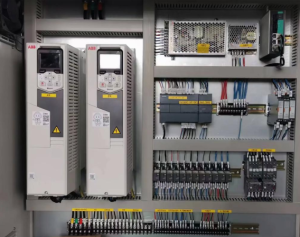
- Protection and Measurement Module: Integrated with protective relays, ammeters, voltmeters, and sensors to achieve fault monitoring, automatic protection, and power metering.
- Control Module: Equipped with operating mechanisms, interlock devices, and indicator lights to ensure safe equipment operation and status monitoring.
2. Technical Parameters of Metal-Enclosed Switchgear
- Voltage Level: Mainly applicable to 1kV~38kV, covering mainstream low and medium voltage distribution scenarios; customized models are available for specialized high-voltage working conditions.
- Rated Current: Generally ranging from 630A to 4000A, customizable according to actual distribution load requirements.
- Short-Circuit Breaking Capacity: Standard specifications range from 20kA to 63kA, meeting short-circuit protection demands for industrial and municipal power systems.
- Arc Flash Protection Level: Equipped with basic internal arc fault protection capability to resist conventional short-circuit arc impact and prevent equipment combustion and explosion risks.
- Ingress Protection Level: Indoor standard models reach IP30~IP40, while outdoor models achieve IP54, adapting to complex environments with dust, humidity, and rainfall.
3. Types of Metal-Enclosed Switchgear
Based on structural form, insulation type, voltage level, and operating mode, metal-enclosed switchgear is divided into three core types. Each category adapts to differentiated project conditions and shall be selected comprehensively according to load demand, site space, and budget constraints.
3.1 Fixed-Type Metal-Enclosed Switchgear
This type features fixedly installed non-extractable switch components, with a simple structure, low cost, and small footprint, as well as straightforward maintenance procedures. It is mainly applied to low-voltage distribution scenarios with stable loads and low fault risks, including small commercial buildings and civil power distribution systems, and serves as the mainstream choice for civil low-voltage power distribution projects.
3.2 Withdrawable Metal-Enclosed Switchgear
Adopting an extractable switch design, the equipment has three working positions: connected, test, and disconnected. It supports maintenance without removing the entire cabinet, significantly improving maintenance efficiency and operational safety. It is widely used in medium-voltage critical power distribution scenarios such as industrial plants, small and medium-sized substations, and core municipal power distribution projects.
3.3 Insulated Metal-Enclosed Switchgear
Adopting composite insulation designs including air insulation and solid insulation, this equipment enhances internal insulation performance and reduces risks of phase-to-phase short circuits and ground discharge. It adapts to harsh working conditions such as high humidity, heavy dust, and high altitude, delivering higher reliability and longer service life than conventional models.
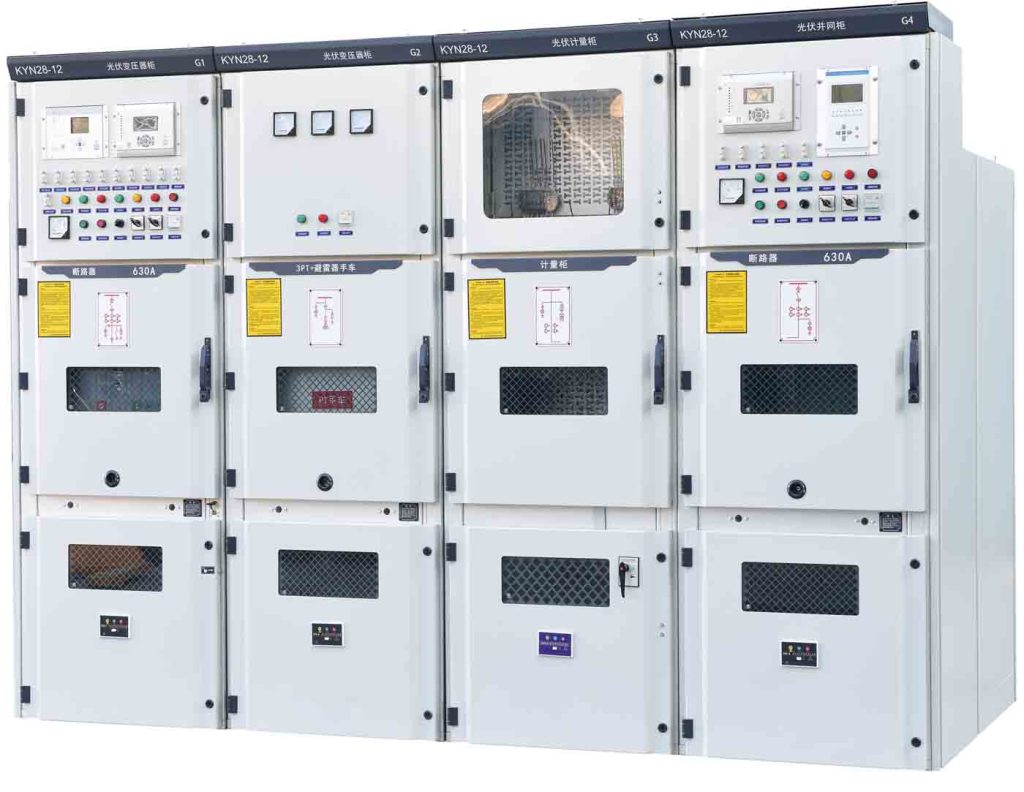
4. Metal-Enclosed Switchgear vs GIS (Gas Insulated Switchgear)
GIS is a high-end high-voltage power distribution equipment with fundamental differences in design logic and application scenarios compared with conventional metal-enclosed switchgear. Equipment selection shall be precisely determined based on site conditions, voltage levels, and reliability requirements.
Conventional metal-enclosed switchgear adopts an air-insulated design with an open structure, high standardization, economical cost, and convenient later maintenance, while it occupies relatively large space and has limited adaptability to extreme environments. In contrast, GIS features a fully sealed SF6 gas-insulated structure with compact size, minimal floor space, superior insulation performance, and strong anti-interference capability, almost unaffected by external environmental conditions. However, GIS requires high procurement and installation costs, sophisticated construction techniques, and complicated and costly maintenance.
Therefore, metal-enclosed switchgear is suitable for medium and low voltage distribution projects with sufficient site space and controllable budgets under conventional working conditions. GIS is only applicable to high-voltage and extra-high-voltage core power hub projects with limited site space and harsh environmental conditions.
Recommended Reading:GIS Switchgear: Principles, Structure, Applications and Selection Guide
5. Metal-Enclosed Switchgear vs Metal-Clad Switchgear
| Comparison Dimension | Metal-Enclosed Switchgear | Metal-Clad Switchgear |
|---|---|---|
| Internal Structure | Fully enclosed metal housing with no mandatory full metal internal isolation. Mostly adopts a common cavity structure with simple zoning in partial models. | Adopts a fully independent metal compartment design. Busbars, circuit breakers, cable units, and control modules are completely isolated by grounded metal partitions. |
| Safety Level | Provides basic protection. Local faults in a single cavity are likely to spread throughout the entire equipment. | Delivers high-level safety protection. Faults are confined to individual compartments to prevent fault propagation, with excellent arc flash resistance. |
| Voltage Adaptation | Mainly applicable to low voltage and conventional medium voltage scenarios (≤10kV) | Designed for medium and high voltage scenarios (2.4kV~38kV), suitable for core high-voltage power distribution systems |
| Maintenance Difficulty | Simple structure with easy operation and low maintenance costs | Precise structural design with strict maintenance standards and standardized inspection procedures |
| Equipment Cost | Cost-effective, ideal for small and medium-budget projects | High procurement and installation costs for high-reliability projects |
| Application Scenarios | Civil buildings, small factories, and ordinary power distribution branch lines | Large-scale industries, substations, core main power distribution lines, and high-reliability power projects |
6. Advantages and Limitations of Metal-Enclosed Switchgear
6.1 Core Advantages
- High Cost Performance: Moderate procurement, installation, and maintenance costs, suitable for most small and medium-sized power projects with flexible budget adaptation.
- Wide Application Coverage: Covers mainstream 1kV~38kV power distribution ranges, adapting to various conventional civil, industrial, and municipal working conditions.
- Efficient and Convenient Maintenance: Standardized and simplified internal structure enables easy fault diagnosis, component replacement, and routine inspection without professional high-end technical teams.
- High Operational Safety and Stability: The fully enclosed metal structure effectively isolates external interferences, preventing equipment failures caused by accidental contact, dust, and moisture with low operational failure rates.
- High Standardization: Compliant with universal international industry standards with strong equipment versatility and high component compatibility, ensuring convenient procurement and replacement.
6.2 Application Limitations
- Limited Fault Isolation Capacity: Without independent full-metal compartment design, local internal short circuits and arc faults tend to spread inside the cabinet, resulting in weaker protection performance than metal-clad equipment.
- Large Floor Space: The air-insulated structure occupies more space than GIS equipment, making it inapplicable for projects with extremely limited site conditions.
- Average Adaptability to Extreme Environments: Its insulation and protection performance will degrade under extreme working conditions such as high corrosion, heavy sand and dust, and ultra-high altitude.
Recommended Reading:Metal-Clad Switchgear: Definition, Structure, Selection and Applications
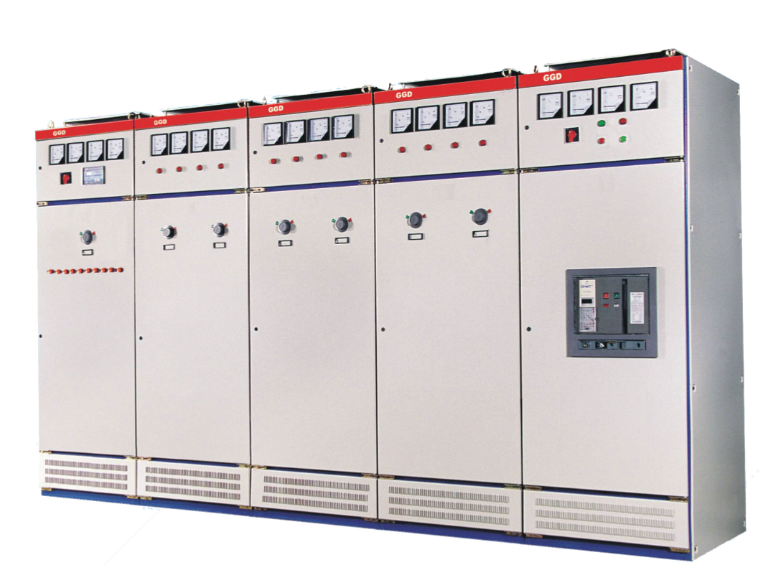
7. Application Scenarios of Metal-Enclosed Switchgear
With balanced performance and cost advantages, metal-enclosed switchgear is the most widely used complete set of switchgear in current power distribution systems. Its core applicable scenarios are as follows:
- Commercial and Civil Buildings: High and low voltage distribution rooms of office buildings, shopping malls, residential communities, and hotels to ensure stable civilian power distribution.
- Industrial Plants: Workshop power distribution and factory power supply systems for light industry, manufacturing, chemical, and other conventional industrial projects.
- Municipal Power Engineering: Urban distribution networks, community power distribution rooms, and power supporting facilities for public infrastructure.
- Small and Medium-Sized Substations: Incoming and outgoing lines, busbar segmentation, and power distribution protection units for substations of 35kV and below.
- New Energy Supporting Projects: On-site power distribution and grid-connected protection systems for distributed photovoltaic and small-scale wind power projects.
This equipment is not applicable to scenarios requiring extreme safety, isolation, and stability performance, such as ultra-high voltage systems, core power hub power supply, high-risk explosion-proof environments, and extreme working conditions. Metal-clad switchgear or GIS equipment is recommended for such projects.
8. Selection Guidelines for Metal-Enclosed Switchgear
Scientific equipment selection is critical to stable power system operation and project cost control. Based on practical engineering experience, six core selection principles shall be followed:
- Match Voltage Level: Select equipment specifications (10kV, 35kV, etc.) accurately according to the project’s power system voltage to avoid voltage mismatch errors.
- Calculate Load Parameters: Select equipment with corresponding breaking capacity and current-carrying capacity based on circuit rated current and short-circuit current to prevent overload operation.
- Adapt to On-Site Working Conditions: Adopt standard models for conventional indoor scenarios and high-protection-level models for humid, dusty, and outdoor environments.
- Balance Cost and Performance: Deploy standard metal-enclosed switchgear for conventional non-core distribution loops and upgrade to metal-clad switchgear for core main power distribution loops.
- Comply with Industry Standards: Strictly meet IEEE, NEMA, and IEC international standards for overseas projects and large-scale bidding projects to ensure compliance and smooth acceptance.
- Consider Maintenance Convenience: Prioritize withdrawable structures for frequently operated and key monitored loops to reduce later maintenance difficulty.
9. Daily Operation, Maintenance and Arc Fault Protection
Standardized operation, maintenance, and safety protection effectively extend equipment service life, reduce failure rates, and avoid safety accidents such as electric arcs and short circuits, serving as the core guarantee for long-term and stable equipment operation.
9.1 Daily Maintenance Specifications
- Regularly clean the equipment shell and internal cavity to remove dust and debris and prevent insulation performance degradation.
- Inspect the operating mechanisms of circuit breakers and disconnectors regularly to ensure flexible operation and reliable interlock devices.
- Monitor the temperature of busbars and wiring terminals to eliminate hidden dangers such as overheating and loose connections caused by poor contact.
- Calibrate relay protection devices and measuring instruments periodically to ensure accurate monitoring data and timely fault protection action.
9.2 Arc Fault Safety Protection
Internal arc faults are the primary safety risk of metal-enclosed switchgear. Strict protective measures must be implemented during operation and maintenance: wear professional arc-flash protective equipment, and strictly prohibit opening the cabinet with live power; regularly inspect the integrity of the arc protection structure to eliminate hidden dangers such as cabinet deformation and seal failure; install arc fault monitoring devices to realize rapid early warning and breaking and prevent accident escalation.
Frequently Asked Questions
1. Is metal-enclosed switchgear a medium-voltage or low-voltage device?
Metal-enclosed switchgear covers both low voltage (≤1kV) and medium voltage (1kV~38kV) ranges. Medium-voltage models dominate mainstream market applications, while low-voltage and customized high-voltage versions are available to meet specific project requirements.
2. What is the core difference between metal-enclosed and metal-clad switchgear?
The essential differences lie in internal compartment structure and safety level. Metal-enclosed switchgear adopts an integral enclosed structure without independent internal metal isolation compartments. In contrast, metal-clad switchgear is equipped with independent grounded metal compartments for all functional modules to completely isolate faults. With higher safety and protection performance, metal-clad switchgear is an advanced category of metal-enclosed switchgear.
3. What is the standard service life of metal-enclosed switchgear?
Under standardized maintenance and conventional working conditions, the equipment service life can reach 15 to 20 years. The service life will be shortened under extreme conditions, and regular maintenance can effectively extend the equipment’s service cycle.
Conclusion
Featuring standardized structure, stable operational performance, high cost performance, and wide scenario adaptability, metal-enclosed switchgear is an indispensable core device for medium and low voltage power distribution systems. Scientific equipment selection based on project voltage level, on-site conditions, load demand, and budget, together with standardized daily maintenance and safety protection, can maximize the stability, safety, and economy of power distribution systems and provide solid support for the implementation and operation of various power projects.
References
- IEEE C37.20.1-2021, Low-Voltage Metal-Enclosed Switchgear Standard
- IEEE C37.20.2-2020, Metal-Clad Switchgear Technical Specification
- IEC 62271-200:2011, High-voltage switchgear and controlgear – Part 200: AC metal-enclosed switchgear and controlgear for rated voltages above 1 kV and up to and including 52 kV