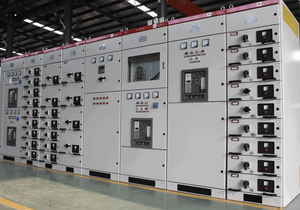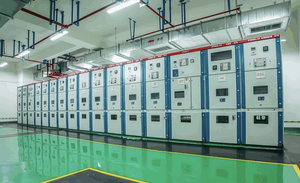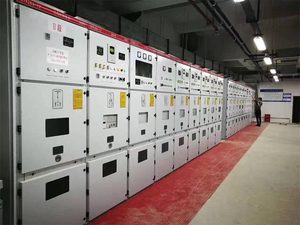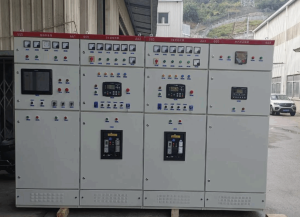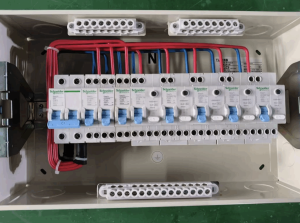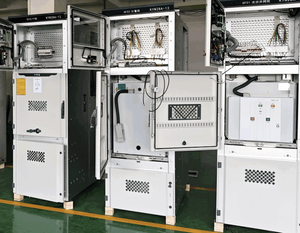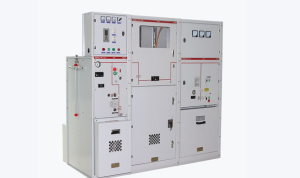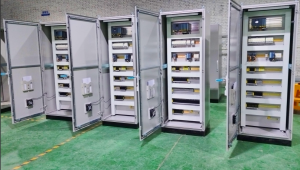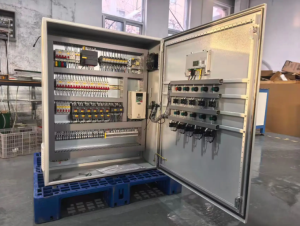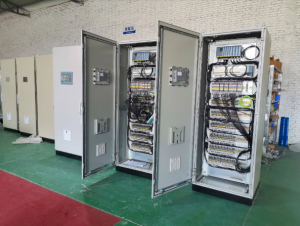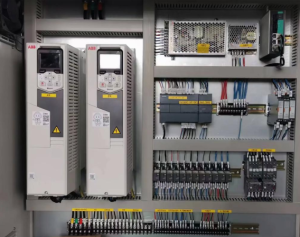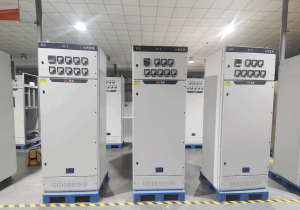
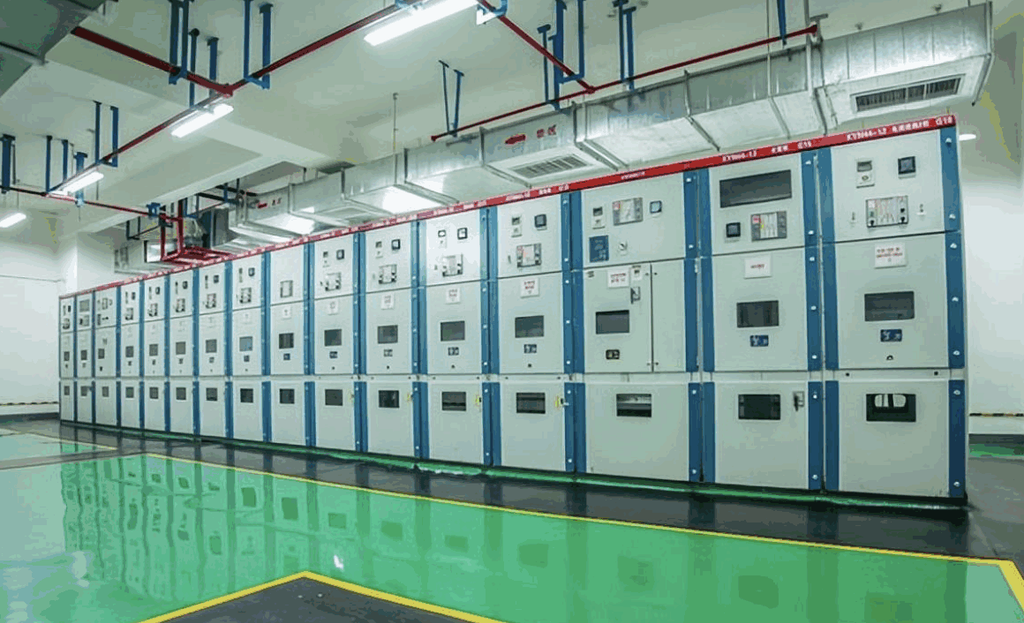
15kV switchgear is a common medium-voltage distribution equipment widely used in industrial power distribution, substations, data centers, commercial buildings, mines, manufacturing plants and utility power systems. It integrates vacuum circuit breakers, busbars, relay protection, metering, instrument transformers, earthing and control systems into a complete assembly, for power reception, distribution, switching, protection and fault isolation. This article comprehensively covers classification, core specifications, compliance standards, application scenarios and procurement guidelines for 15kV switchgear.
1. What Is 15kV Switchgear?
15kV switchgear is a complete set of switching devices for medium-voltage power systems. Its main functions include:
- Receiving medium-voltage power supply
- Distributing electric energy
- Making and breaking load currents
- Rapidly interrupting fault current during short-circuit and other failures
- Providing overcurrent, earth fault and other protection for lines and equipment
- Measuring parameters such as voltage, current and power
- Electrical isolation of equipment and circuits
- Providing earthing and safety measures for maintenance
2. How Does 15kV Switchgear Work?
Medium-voltage switchgear mainly consists of circuit breakers, disconnectors, load switches, operating mechanisms, instrument transformers and various protection devices. Its working principle is summarized as follows:
- Circuit breaker: The core component of switchgear. It can quickly cut off current in case of overload, short circuit and other faults to protect circuits and equipment from damage.
- Disconnector: After the circuit breaker opens, it isolates the section to be maintained from live parts to guarantee personnel safety during maintenance.
- Load switch: Equipped with simple arc-extinguishing structure, it can make and break rated load current and overload current. It also provides isolation with a visible open gap for maintenance.
- Operating mechanism: Controls closing and opening of circuit breakers and disconnectors, available in manual, motorised or remote control modes.
- Protection devices: Including current transformers, voltage transformers and various relays. They monitor operating status of the circuit and trigger circuit breaker tripping promptly when faults occur.
3. Types of 15kV Switchgear
By cabinet construction
- Semi-enclosed switchgear: Front and side panels enclosed, rear side and busbars exposed. Simple structure, low cost but poor safety, nearly phased out. Typical model: GG1A.
- Metal-enclosed box-type switchgear: With metal enclosure, limited compartments and enclosed busbars, offering good safety. Typical model: XGN.
- Compartment-type switchgear: Compartments separated by one or multiple non-metallic partitions for improved safety. Typical model: JYN.
- Metal-clad switchgear: Compartments separated by earthed metal partitions. High safety level, sophisticated structure, high machining precision and relatively higher price. Typical models: China KYN series, ABB ZS1.
By insulation medium inside cubicle
- Air-insulated switchgear (AIS): Phase-to-phase and phase-earth insulation realised by air clearance. Stable insulation performance, low cost with larger cabinet dimension.
- Composite-insulated switchgear: Insulation achieved by reduced air clearance plus solid insulating materials. Compact cabinet size, slightly weaker anti-condensation performance and higher cost.
- Gas-insulated switchgear (GIS): All circuit components installed inside sealed vessels filled with SF₆ gas. Sophisticated technology, strict manufacturing tolerance and high price. This type is mostly adopted for extra-high voltage applications.
4. 15kV Switchgear Specifications
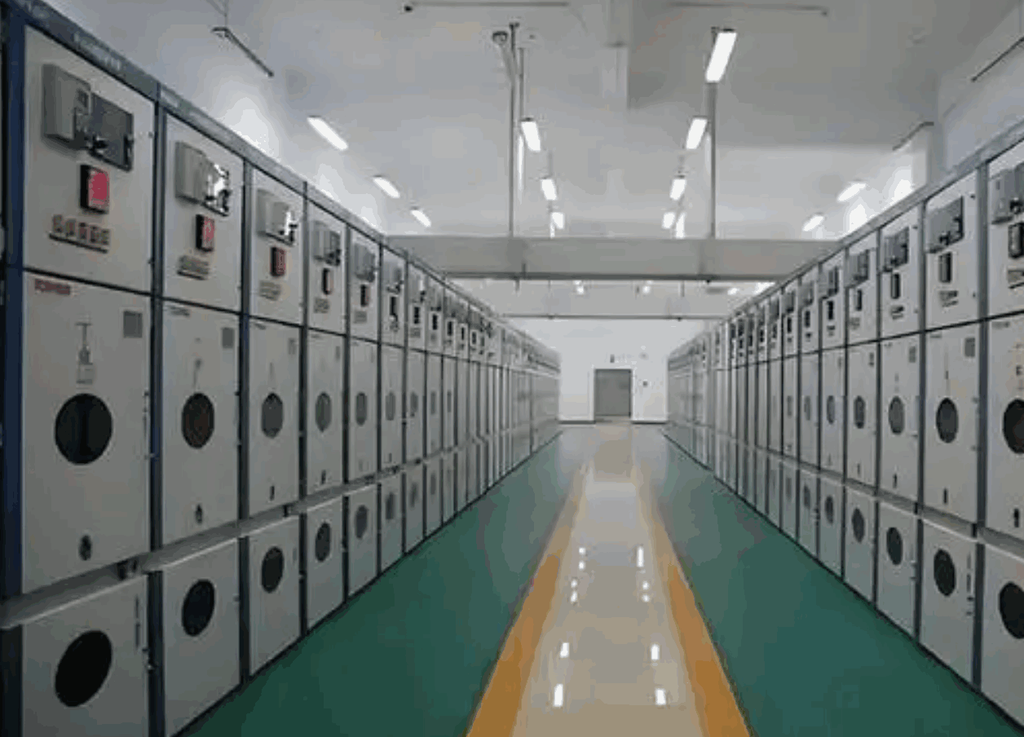
| Parameter | Typical Considerations |
|---|---|
| Rated Voltage | 15kV Class |
| System Voltage | Defined by actual grid condition |
| Rated Current | Calculated based on load demand |
| Frequency | 50Hz / 60Hz |
| Interrupting Rating | Determined by short-circuit calculation |
| Short-Time Withstand | Based on system fault level |
| BIL | Determined by insulation coordination |
| Circuit Breaker | Normally VCB (Vacuum Circuit Breaker) |
| Installation | Indoor / Outdoor |
| Insulation Type | Air / Gas / Other |
| Busbar Material | Copper / Aluminum |
| Protection Functions | Overcurrent / Ground Fault, etc. |
| Enclosure Class | Metal-Clad / Metal-Enclosed, etc. |
5. How Much Does 15kV Switchgear Cost?
There is no universal fixed price for 15kV switchgear across all projects.
The price is mainly affected by the following factors:
- Rated current
- Short-circuit interrupting capacity
- Quantity of cubicles
- Number of circuit breakers
- VCB specifications
- CT/PT configuration
- Protection relays
- Busbar specification
- Metal-Clad or Metal-Enclosed design
- Indoor or outdoor application
- Arc-resistant design
- UL / CSA and other certifications
- Customisation scope
- Factory acceptance tests
- Packaging and transportation
The practical procurement price can be expressed as:
Switchgear Price = Base Switchgear + Breakers + Protection + Metering + Options + Testing + Transportation
For example, for 15kV switchgear, the price gap can be huge between a simple feeder cubicle and a complete switchgear system equipped with multiple draw-out VCBs, advanced protection, metering, automatic transfer and arc-resistant design.
6. Applications of 15kV Switchgear
Medium-voltage switchgear is widely deployed in power, oil & gas, marine, automotive, metallurgy & mining, electronics and other industrial sectors, as well as airport, hospital, building, data centre, transportation and other urban infrastructure fields. Built-in switching, protection, metering and control devices manage power flow in the grid and guarantee power continuity for commercial, industrial and utility-scale facilities.
Responding to new power system development requirements, 15kV switchgear is also applied in new energy and energy storage interconnection, substations, distribution switch stations, industrial parks and power distribution for critical infrastructure.
7. Applicable Standards for 15kV Switchgear
- International Standards:Mainly compliant with IEC 62271 series, covering full lifecycle specifications of design, manufacturing, testing and maintenance for medium-voltage switchgear, the general global access standard for 15kV switchgear. Arc fault protection follows IEC 61641 which defines performance requirements for arc protection, suitable for high-end safety scenarios.
- North American Standards:Projects exported to North America shall comply with ANSI/NEMA industry standards, plus UL and CSA safety certifications. It strictly follows design and acceptance specifications for North American medium-voltage distribution equipment to ensure compliance and reliable operation within North American power grids.
- Safety & Maintenance Standards:NFPA 70E, the globally recognised electrical safety code, defines arc flash protection, live working and power-off maintenance safety rules for 15kV switchgear. It serves as the core compliance reference for equipment maintenance and on-site operation.
8. How to Choose the Right 15kV Switchgear?
- Match project standards first: Domestic projects follow GB standards; overseas projects adopt IEC / ANSI corresponding certifications to ensure compliance and smooth acceptance.
- Select equipment type according to working conditions: Metal-clad and arc-resistant types for complex high-risk scenarios; economical air-insulated equipment for general applications.
- Verify key parameters to ensure rated current, short-time withstand and protection rating match project load and environmental conditions.
- Prefer manufacturers with complete qualifications, mature production systems and comprehensive after-sales service to guarantee equipment quality and long-term maintenance support.
FAQ
Q1: Can 15kV switchgear and 12kV switchgear be interchangeable?
Not fully interchangeable. 15kV switchgear can be used downwards for 12kV distribution scenarios, while 12kV switchgear has insufficient dielectric strength and short-circuit withstand capability. It cannot replace 15kV equipment for complex operating conditions or projects with large voltage fluctuations. Mixed use may cause insulation breakdown and equipment failure.
Q2: Is 15kV switchgear metal-clad or enclosed?
15kV switchgear includes both construction types. Metal-clad type dominates mainstream engineering applications for higher safety. Metal-enclosed type can be selected for small ordinary civil projects, subject to project safety class and budget.
Q3: Does outdoor 15kV switchgear require customisation?
Yes. Outdoor cubicles need enhanced treatment for waterproofing, dust prevention, corrosion resistance and UV resistance with higher enclosure rating to adapt to harsh open-air environments. Indoor cabinets cannot be directly used as outdoor equipment.
Summary
As core equipment of medium-voltage distribution systems, 15kV switchgear features excellent voltage resistance, stable operation and wide adaptability for various working conditions. It becomes the preferred option for industrial power distribution, new energy, municipal power and overseas projects. Proper equipment selection, standardised maintenance and high-quality hardware are critical to reduce distribution faults, control project costs and improve power supply reliability.