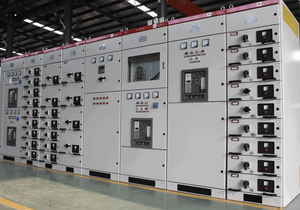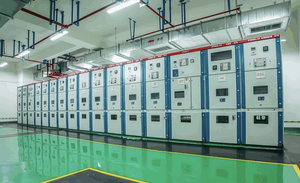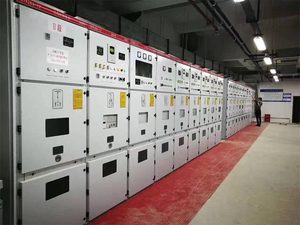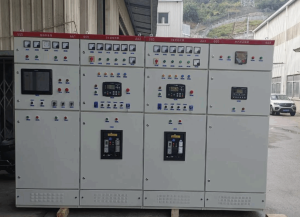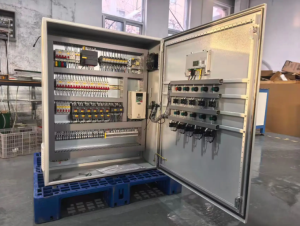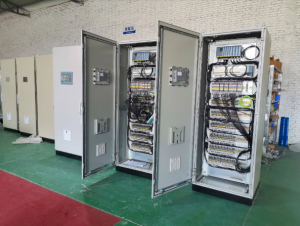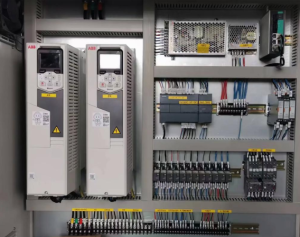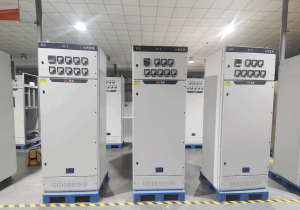
Industrial switchgear is core complete‑set power distribution and protection equipment for factories, mines, chemical plants, data centers, energy‑storage power stations and other industrial sites. It undertakes critical functions including power distribution under fault conditions, fault protection and safe isolation for maintenance. Combining international engineering standards and on‑site practical experience, this article gives a comprehensive introduction to industrial switchgear covering its definition, internal components, product classifications, industry standards, selection parameters, typical applications, installation and commissioning, operation & maintenance as well as procurement guidelines.
1. What is Industrial Switchgear
1.1 Basic Definition
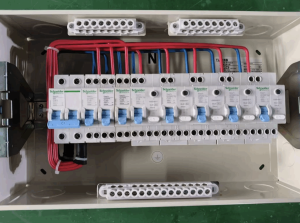
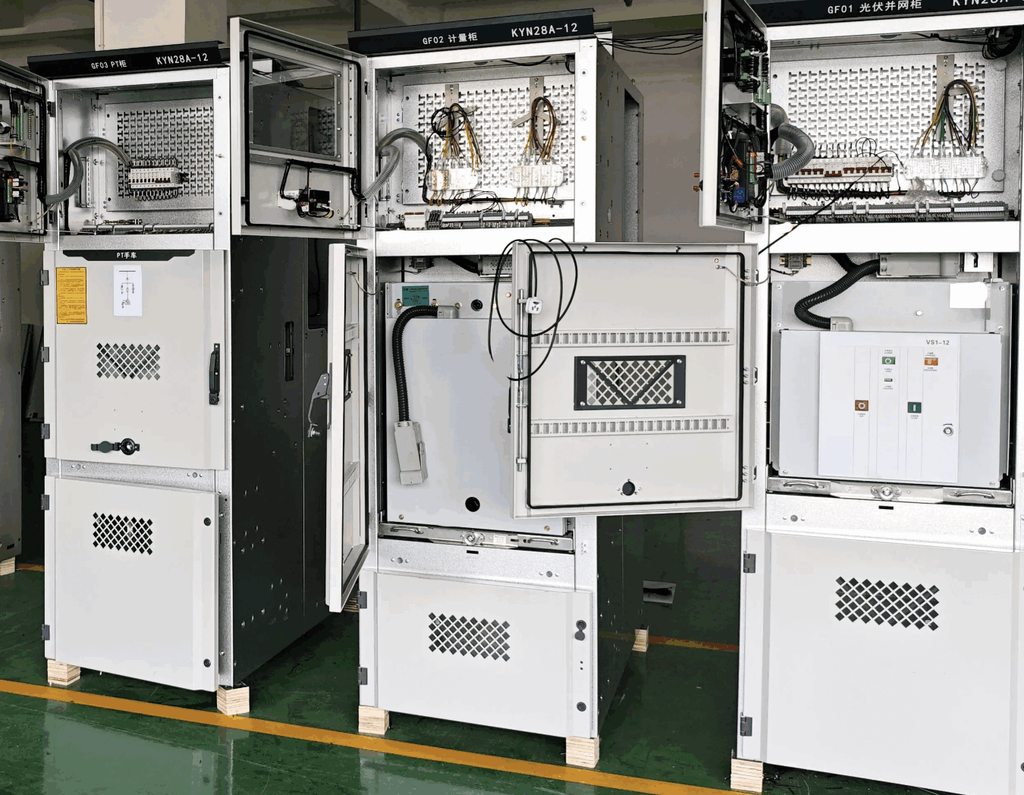
Industrial switchgear refers to metal‑enclosed complete power distribution assemblies integrating circuit breakers, disconnectors, protective relays, busbars, earthing components and monitoring units. Designed for heavy‑duty industrial conditions, it withstands high short‑circuit impulse currents to realize control, protection and isolation within power systems. It is widely applied for incoming, feeder and bus‑coupler circuits in industrial projects.
1.2 Core Components
- Switching devices: circuit breakers, disconnectors, earthing switches, fuses
- Protection and measurement‑control units: protective relays, current / voltage transformers
- Conductive parts: copper busbars, cable terminal lugs
- Cabinet structure: metal‑enclosed enclosure, compartmentalized sections, mechanical interlock mechanisms
- Auxiliary modules: earthing system, status indicator lights, SCADA communication modules
1.3 Three Core Functions
Power Distribution: Distributes power from upstream sources to production equipment and workshop loads across plant facilities to deliver multiple power output branches. Fault Protection: Rapidly trips faulty circuits upon short‑circuit, overload and earth‑fault occurrences to prevent equipment burnout and electrical fires, and contain fault propagation. Safe Isolation: Enables power‑off isolation for individual circuits during maintenance while keeping other circuits energized, ensuring personnel safety without plant‑wide power shutdown.
2. Main Types of Industrial Switchgear
2.1 Classification by Voltage Level
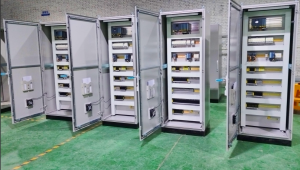
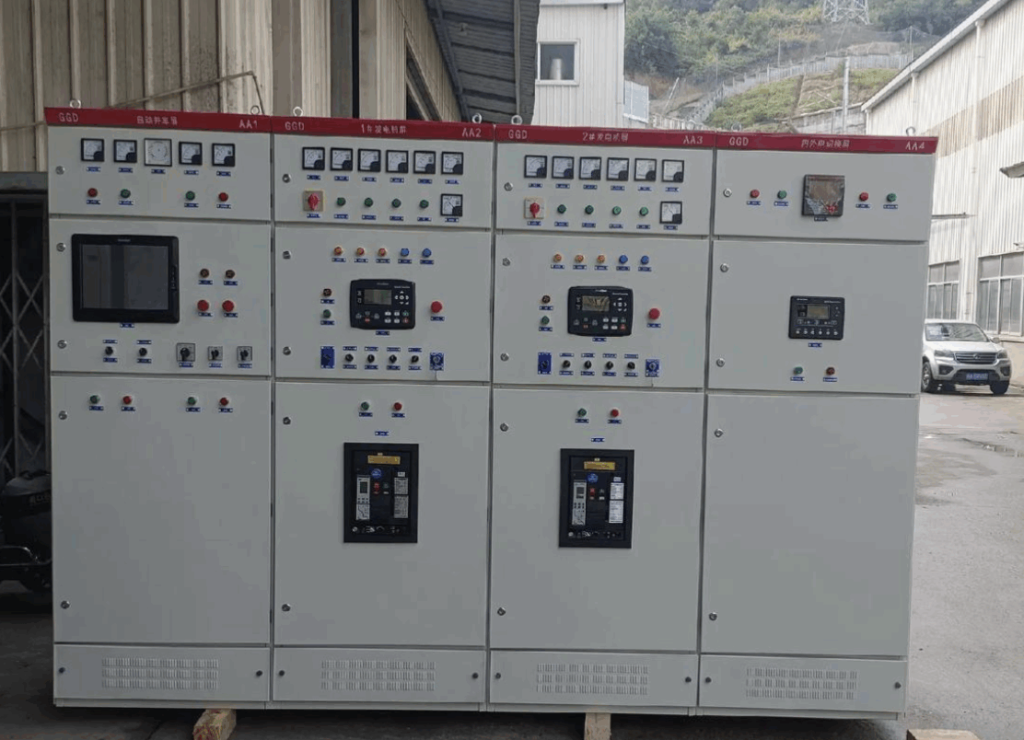
- Low‑voltage industrial switchgear: Rated voltage below 1 kV, mostly deployed for workshop power distribution and used in conjunction with MCC (Motor Control Centers).
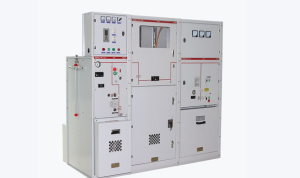
- Medium‑voltage industrial switchgear: 1‑52 kV, the most widely adopted type for heavy‑industry, mining and energy‑storage projects, incorporating numerous vacuum‑breaker circuits.
2.2 Classification by Insulation Medium
- AIS (Air‑Insulated Switchgear): Uses air as insulation medium. Features low capital cost and convenient maintenance yet larger footprint. Suitable for indoor industrial substations with favorable ambient conditions.
- GIS (Gas‑Insulated Switchgear): Live primary components are hermetically sealed in gas‑filled metal enclosures. Compact footprint with strong resistance to dust, humidity and salt spray. Higher procurement cost; ideal for space‑constrained and harsh industrial environments.
2.3 Classification by Cabinet Construction
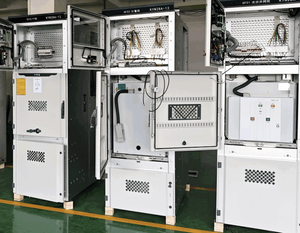
- Metal‑clad switchgear: Fully metal‑segregated functional compartments delivering superior safety. The mainstream option for medium‑voltage industrial projects.
- Metal‑enclosed switchgear: Fully enclosed cabinets with lower compartment segregation performance compared with metal‑clad type, commonly used for low‑voltage industrial power distribution.
- Arc‑resistant switchgear: Capable of mitigating internal arc faults and preventing arc blast towards operating personnel. Highly recommended for high‑risk industrial plants.
2.4 Co‑application of MCC and Industrial Switchgear
MCC (Motor Control Center) governs start‑stop and protection for various motors and is not categorized as switchgear itself. In industrial projects, low‑voltage industrial switchgear completes power incoming and distribution before feeding downstream MCC assemblies to supply motor loads such as water pumps, fans and compressors. The two systems are frequently deployed together.
3. Typical Application Scenarios
- Heavy‑industry plants, metallurgical and chemical facilities: Exposed to corrosive gases and dust; demanding high short‑circuit withstand capability and cabinet ingress‑protection ratings.
- Mining and oil‑gas operations: Complex operating conditions; some units must cope with outdoor and high‑altitude environments.
- Large‑scale manufacturing plants and data centers: High load capacity and strict power‑supply continuity requirements, often fitted with bus‑coupler dual‑power transfer schemes.
- New‑energy and energy‑storage supporting facilities: Step‑up substations and auxiliary power distribution systems for photovoltaic and energy‑storage power stations.
- Outdoor industrial plants: Outdoor‑rated enclosures are required with IP ratings matched against rain, snow and sand; standard indoor switchgear shall not be exposed to open‑air conditions.
4. Key Selection Guidelines for Industrial Switchgear
4.1 Confirm Fundamental Electrical Parameters
Specify rated voltage, rated operating current, rated short‑time withstand current and peak withstand current. Short‑circuit parameters represent core selection criteria which must match system short‑circuit capacity; insufficient ratings may trigger severe equipment failures.
4.2 Operating Ambient Conditions
Indoor or outdoor installation, ambient temperature, altitude, presence of dust, corrosive fumes or salt spray. Determine IP ingress‑protection grades accordingly: IP30‑IP41 for standard indoor environments; IP54 or above for humid and corrosive surroundings. Derating for insulation performance is mandatory for high‑altitude deployments.
4.3 Safety Configuration Requirements
For high‑risk industrial sites, arc‑flash protection systems are recommended to rapidly suppress internal arc faults and mitigate hazards to personnel and assets. Verify compartment segregation grades and IAC (Internal Arc Classification) ratings to satisfy project safety specifications. Implement well‑designed earthing schemes for reliable fault‑current dissipation.
4.4 Smart Communication Requirements
For integration with plant‑wide SCADA or DCS systems, confirm supported communication protocols for protective relays and measurement‑control units such as IEC 61850 and Modbus to enable remote telemetry, remote signalling and fault alarming.
4.5 Cabinet Unit Form
- Draw‑out units: Simplify component replacement and maintenance with limited power‑outage scope, preferred for general industrial applications.
- Fixed units: Lower capital expenditure, suited for simple operating conditions with rare circuit modifications.
5. Installation and Commissioning of Industrial Switchgear
5.1 Pre‑installation Site Prerequisites
Ensure adequate ventilation and heat dissipation within electrical rooms; reserve sufficient access space for cabinet operation and maintenance. Construct rigid equipment foundations and implement earthing‑grid construction per drawings to meet specified earthing‑resistance values. Outdoor cabinets shall be equipped with drainage and anti‑condensation measures.
5.2 Incoming‑goods Acceptance
Cross‑check cabinet models, component specifications and nameplate ratings. Inspect enclosures for deformation and damage, verify reliable actuation of mechanical interlocks, and collect factory test reports and certificates of conformity.
5.3 Power‑on Commissioning Procedures
Re‑verify tightening torque for busbar connections and inspect secondary‑circuit wiring. Perform insulation and voltage‑withstand tests, set protective‑relay parameters and conduct fault‑simulation tripping tests. Execute switching‑operation trials and validate interlock logic prior to energization under load.
5.4 Safety Construction Precautions
Observe lockout‑tagout procedures during high‑voltage commissioning. Energization is prohibited before completing earthing connections. For draw‑out units, strictly follow operating sequences for working, test and isolated positions; forced manipulation of mechanical interlocks is forbidden.
6. Procurement Recommendations
6.1 Core Parameter Checklist for Technical Specifications
Voltage class, rated current, short‑time withstand current, ingress‑protection rating, insulation requirements, internal‑arc‑protection necessity, communication protocols, cabinet structure, draw‑out / fixed‑unit configuration and ambient operating conditions.
6.2 Certifications and Factory Documentation
Request third‑party type‑test reports and certificates of compliance from manufacturers with complete factory acceptance tests performed. For export‑oriented projects, confirm product certifications comply with target‑market standards.
6.3 Commercial and After‑sales Considerations
Clarify delivery lead time, spare‑parts supply cycle for critical components, on‑site technical guidance and long‑term operation‑and‑maintenance technical support.
Frequently Asked Questions
Q1: Can industrial switchgear be deployed outdoors directly?
Standard indoor industrial switchgear must not be exposed to open‑air conditions. Outdoor applications require outdoor‑specific cabinet designs with upgraded IP ratings plus integrated heating and dehumidifying modules for condensation prevention.
Q2: How to distinguish industrial switchgear from MCC (Motor Control Center)?
Industrial switchgear focuses on power incoming, high‑current distribution and system‑level fault protection. MCC specializes in start‑stop control for motor circuits. The two systems are often deployed in combination.
Q3: How to choose between AIS and GIS industrial switchgear?
Select AIS for projects with ample floor space, constrained budgets and frequent circuit modifications. Choose GIS for space‑limited sites, harsh ambient environments and low‑maintenance expectations at the cost of higher capital investment.