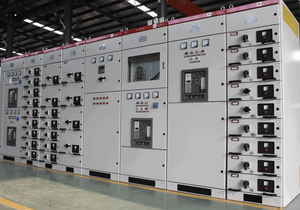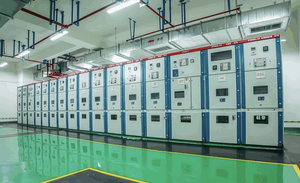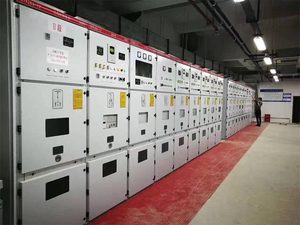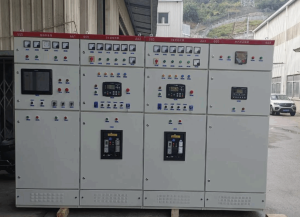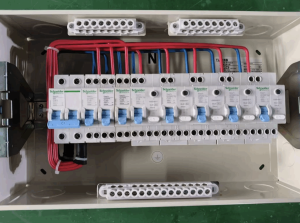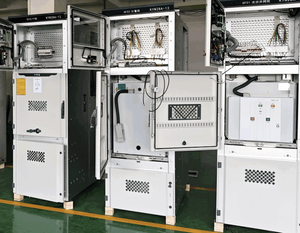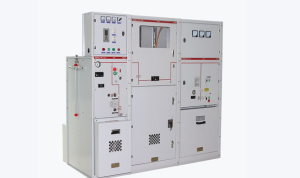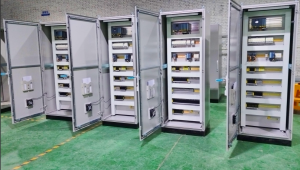
Different from general metal-enclosed switchgear, metal-clad switchgear adopts a modular design with fully independent grounded metal compartments. It completely physically isolates busbars, circuit breakers, cable terminals and secondary instrument systems, eliminating electrical hazards such as arc flash propagation, phase-to-phase short circuits and cascading faults from the structural root. This article systematically elaborates on its core definition, structural working principles, key differences from general metal-enclosed switchgear, mainstream model parameters and industrial application scenarios.
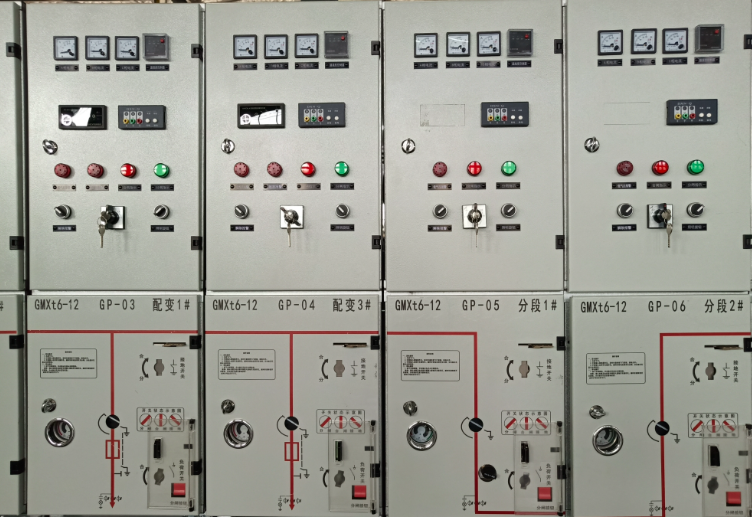
1. Definition and Core Characteristics of Metal-Clad Switchgear
In accordance with international electrical standards IEEE and IEC, metal-clad switchgear is an advanced category of metal-enclosed switchgear. It refers to a complete set of medium-voltage switch equipment equipped with independent grounded metal partitions, draw-out circuit breakers and comprehensive mechanical and electrical interlock systems, and it is currently the mainstream preferred equipment for main power distribution systems in industrial and power sectors.
Distinguished from ordinary metal-enclosed equipment by its core judging criteria, it features four exclusive core characteristics:
- Fully independent grounded metal compartments: The cabinet interior is strictly divided into four independent functional compartments via grounded metal partitions that remain grounded at all times to prevent fault crosstalk between compartments, unlike simple metal-enclosed cabinets with insulating partitions or no partitions.
- Draw-out main switch structure: The core circuit breaker adopts a movable draw-out design. Maintenance and replacement do not require disassembly of the main cabinet body, greatly shortening maintenance downtime and suiting continuous production conditions.
- Multi-layer mechanical and electrical interlock protection: Mandatory interlock mechanisms are installed to strictly follow the operating sequence of “open circuit – isolate – ground”. It prohibits illegal operations such as closing switches under load, opening doors with live components and erroneous earthing, eliminating human-induced accidents through hardware design.
- Arc fault containment design: The cabinet is equipped with dedicated pressure relief channels and sealed protective structures, which fully confine internal arc faults to a single compartment. This prevents arc leakage and spread that would burn out the entire cabinet, protecting on-site personnel and surrounding equipment.
Benefiting from the above structural features, metal-clad switchgear boasts prominent advantages including high safety, strong fault isolation performance, flexible maintenance and long service life, making it essential equipment for power distribution scenarios requiring high reliability.
2. Working Principle and Composition of Metal-Clad Switchgear
2.1 Core Working Principle
The core operating logic of metal-clad switchgear lies in compartmentalized isolation protection, precise fault containment and safety interlock control. Under normal operating conditions, each independent compartment performs its dedicated functions of power transmission, distribution and circuit protection. When a short circuit, electric leakage or arc fault occurs in one compartment, the grounded metal partition completely blocks fault propagation paths and restricts failures within a single functional zone without disrupting normal operation of other circuits. Meanwhile, the interlock system locks equipment status throughout operation to avoid secondary accidents caused by misoperation, maximizing stable operation of the power distribution system.
2.2 Structure of Four Independent Functional Compartments
Standard metal-clad switchgear features an internal modular compartment layout with four fully separated, non-communicating compartments, which form the structural foundation of its superior performance:
- Busbar compartment: Holds main and branch busbars with an insulated enclosed design for centralized power input and distribution. Its independent structure effectively stops busbar faults from spreading to circuit breaker and cable circuits.
- Circuit breaker compartment: The core functional zone of the cabinet fitted with key switching components such as vacuum circuit breakers to perform circuit switching, overload and short-circuit protection. Breakers can be freely drawn out for inspection and replacement.
- Cable connection compartment: Designed for cable terminal connection and earthing switch installation as the primary access zone for incoming and outgoing lines. Its independent space facilitates cable maintenance, insulation testing and fault troubleshooting.
- Instrument control compartment: Houses secondary control loops, protection devices, metering instruments, indicator lights and other components to realize equipment monitoring, remote control and fault alarm. High-voltage and low-voltage areas are fully separated to avoid interference of secondary equipment by high voltage.
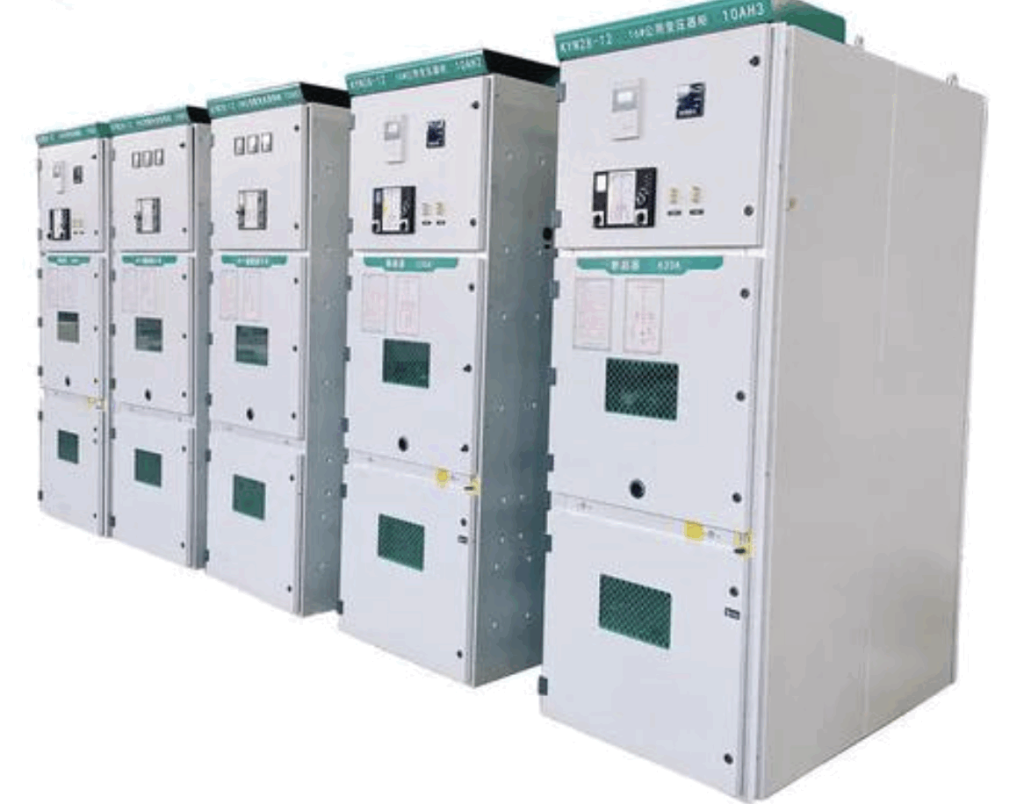
3. Metal-Clad Switchgear vs General Metal-Enclosed Switchgear
During engineering selection, the two most frequently confused pieces of equipment are metal-clad switchgear and general metal-enclosed switchgear. Although both belong to metal-enclosed power distribution equipment, they have fundamental differences in structure, safety performance, maintainability and cost, which constitute the primary reasons for their price gaps. Detailed comparisons are listed below:
| Comparison Dimension | Metal Clad Switchgear | Metal Enclosed Switchgear |
| Internal Compartment Structure | Fully grounded metal partitions with four completely independent and enclosed functional compartments | No strict metal isolation partitions; mostly open integrated cabinet with only outer enclosure sealing |
| Arc Flash Protection Performance | Arc faults are confined to a single compartment with dedicated pressure relief channels, delivering extremely high protection levels | No compartmentalized protection; arc faults tend to spread across the entire cabinet and cause cascading failures |
| Switch Structure Type | Standard draw-out circuit breaker design allowing maintenance and replacement without full-system shutdown | Mostly fixed-type switch components requiring full-circuit shutdown for maintenance |
| Maintenance Flexibility | Single-circuit maintenance does not affect other circuits, featuring minimal downtime and high maintenance efficiency | Partial faults or maintenance require overall power outage, resulting in high maintenance costs and wide operational impact |
| Equipment Cost | Higher manufacturing cost due to sophisticated structural craftsmanship and superior protection design | Cost-effective with simple structure and low manufacturing process requirements |
| Application Scenarios | Core power distribution scenarios requiring high reliability, continuous operation and superior safety standards | General civil power distribution scenarios with stable loads and allowable short-term power outage |
4. Technical Parameters of Metal-Clad Switchgear
4.1 Standard Rated Voltage Range
Per universal international electrical standards, metal-clad switchgear covers standard rated voltages of 2.4kV, 11kV, 13.8kV, 22kV, 24kV and 35kV. Among these, 11kV and 24kV are the most widely adopted voltage grades for industrial, power grid and new energy projects, matching the majority of medium-voltage power distribution working conditions.
4.2 Mainstream Industrial Models
The KYN28 series draw-out metal-clad switchgear is the most widely deployed model in domestic and overseas engineering projects. Fully compliant with IEC and IEEE standards, this series features mature structure, strong compatibility and universal maintenance spare parts, serving as the top choice for medium and large-scale projects. It is compatible with vacuum circuit breakers and intelligent protection devices to realize intelligent power distribution management.
4.3 Core Technical Parameters
Core parameters of standardised equipment are listed below as core references for project selection and bidding:
- Rated current: 630A ~ 4000A
- Rated short-time withstand current: 20kA ~ 40kA (3s)
- Protection class: IP4X (normal operation), IP2X (cabinet door open for maintenance)
- Operation mode: Electric operation with manual backup, equipped with intelligent remote control interfaces
5. Application Scenarios of Metal-Clad Switchgear
- Power grid systems: Main power distribution circuits of urban distribution substations and transformer substations to guarantee stable regional power supply.
- New energy industry: Step-up power distribution systems for photovoltaic power stations, wind farms and energy storage stations, adapting to fluctuating operating characteristics of new energy assets.
- Manufacturing industry: Continuous-production factories including chemical, metallurgical and intelligent manufacturing plants to avoid production losses caused by power outages.
- Infrastructure: Critical public facilities such as rail transit, large data centers, hospitals and airports to ensure uninterrupted operation of core equipment.
6. Precise Switchgear Selection Guide
6.1 Scenarios Prioritizing Metal-Clad Switchgear
Metal-clad switchgear is mandatory for core power distribution circuits, continuous production environments, densely staffed premises, high-voltage large-capacity power distribution systems and projects with stringent requirements for power supply stability and safety. It mitigates power distribution safety risks at the equipment level.
6.2 Scenarios Suitable for General Metal-Enclosed Switchgear
General metal-enclosed switchgear can be adopted for auxiliary power distribution of ordinary civil buildings, low-load short-term operating circuits, projects allowing short power outages for maintenance, and budget-limited projects with simple operating conditions, balancing practicality and cost-effectiveness.
7. Conclusion
Metal-clad switchgear is high-performance core equipment for medium-voltage power distribution systems. Its core design featuring independent grounded compartments, modular architecture, multi-layer safety interlocks and arc fault containment delivers far superior safety and stability compared with general metal-enclosed switchgear. Despite higher upfront equipment costs, its extremely low failure rate, flexible maintenance and extended service life effectively reduce long-term project maintenance expenses and economic losses from power outages.
Frequently Asked Questions
Q1: Can metal-clad switchgear be used for outdoor applications?
No. This equipment is dedicated to indoor medium-voltage power distribution. Its cabinet protection structure and insulation system are not designed to withstand harsh outdoor conditions including rain, snow, sand dust and extreme temperature fluctuations, and it can only be installed in indoor power distribution rooms and substation cabinet areas.
Q2: What is the standard service life of metal-clad switchgear?
Under standard operating conditions with standardized installation and regular maintenance, the overall service life of the equipment can reach 20 to 30 years. Core switching components can be replaced separately according to operating status to significantly extend the overall service life of the cabinet.
Q3: Does metal-clad switchgear require professional installation and commissioning?
Yes. As high-precision complete medium-voltage equipment, it involves professional procedures such as high-voltage wiring, interlock calibration, insulation testing and protection setting adjustment. Installation and commissioning must be completed by professional teams with high-voltage electrical qualifications to ensure safe and stable equipment operation.
References
- IEEE C37.20.2-2023, Metal-Clad Switchgear Standard
- IEC 62271-200, High-voltage switchgear and controlgear – Metal-enclosed switchgear and controlgear assemblies
- IEEE C37.20.9a-2024, Standard for Metal-Enclosed Gas Insulated Switchgear