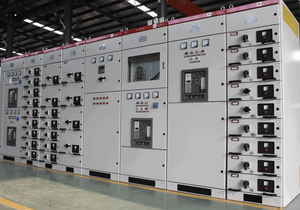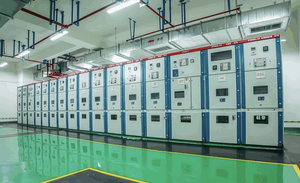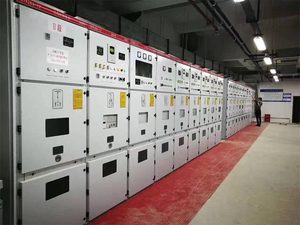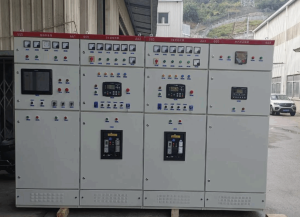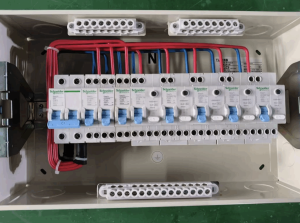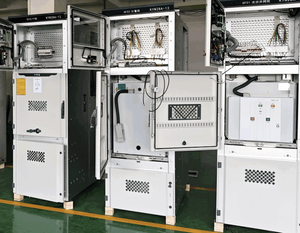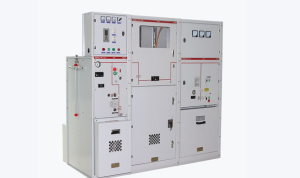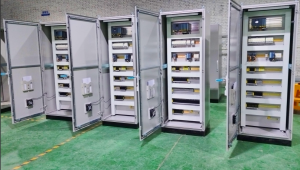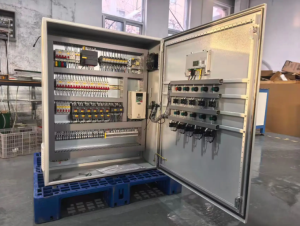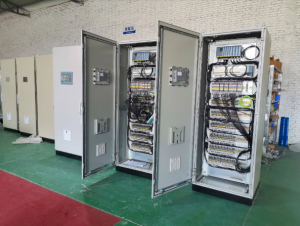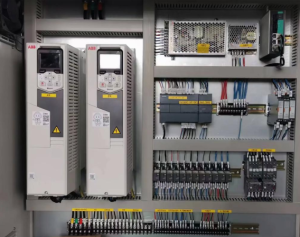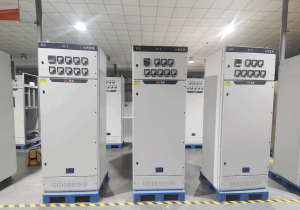
Vacuum switchgear is the core complete set of electrical equipment for medium-voltage power distribution systems. It is a metal-enclosed switchgear that takes vacuum interrupters as the core arc-extinguishing components. It is mainly used for power distribution, circuit switching, fault protection and electrical isolation in power systems, and is widely applicable to medium and high voltage distribution conditions ranging from 1kV to 52kV. Compared with traditional oil-immersed switchgear and SF6 switchgear, vacuum switchgear has become mainstream power distribution equipment in global power grids, industrial infrastructure, rail transit and other sectors thanks to its outstanding strengths including high safety, environmental friendliness and low maintenance requirements, and is gradually replacing outdated switchgear products.
1. Working Principle of Vacuum Switchgear
The core operating logic of vacuum switchgear relies on vacuum arc-extinguishing technology to complete circuit switching and fault arc suppression. Its core medium is a high-vacuum interrupter with an internal vacuum degree above 10⁻⁴ Pa, which contains almost no gaseous medium and fundamentally eliminates risks such as combustion, medium leakage and explosion existing in traditional switchgear.
During normal operation, the moving and fixed contacts inside the vacuum interrupter are closely fitted to maintain circuit conduction and continuous power transmission. When the system needs circuit breaking or short-circuit/overload faults occur on the circuit, the operating mechanism rapidly drives the moving contact to separate from the fixed contact, generating an electric arc at the moment of separation. Since the interrupter operates under vacuum with no gas to sustain the arc, charged particles diffuse and recombine rapidly, quenching the electric arc within milliseconds and cutting off the faulty circuit synchronously.
For closing operation, the energy storage mechanism drives the contacts to close and restore circuit conduction. The matched control system can accurately control the timing of opening and closing, and cooperates with relay protection devices to realize automatic protection and stable operation of power systems. The entire operation process involves no combustion, exhaust emissions or medium loss, delivering far superior operational safety and stability compared with conventional switchgear.
2. Structure and Components of Vacuum Switchgear
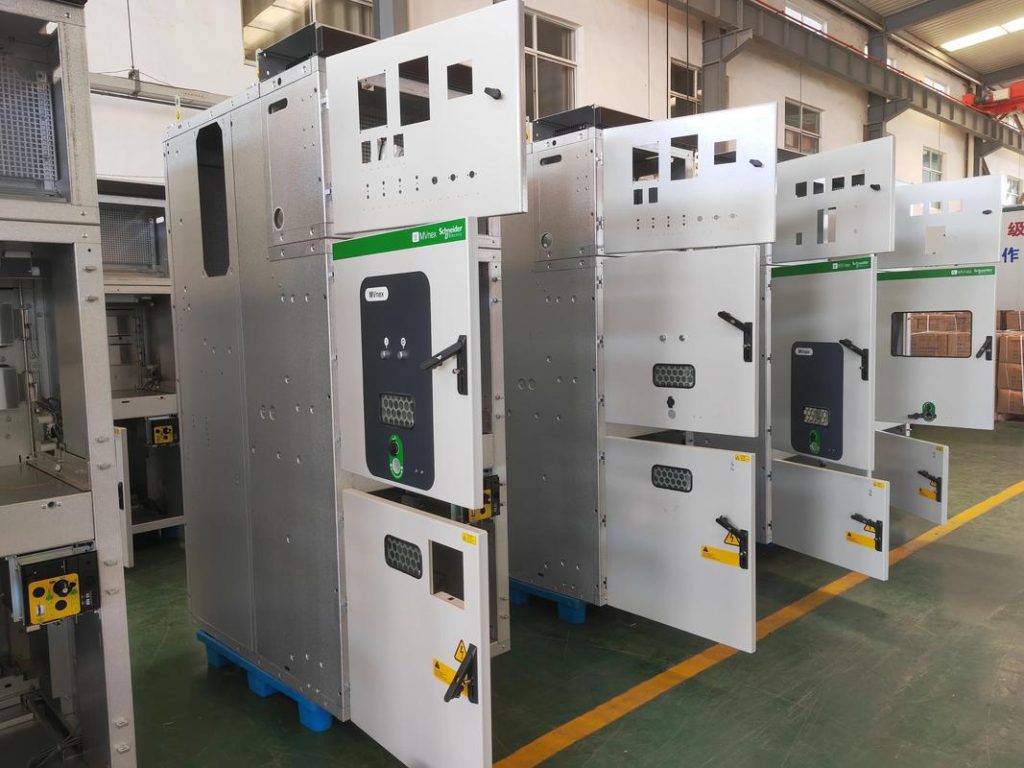
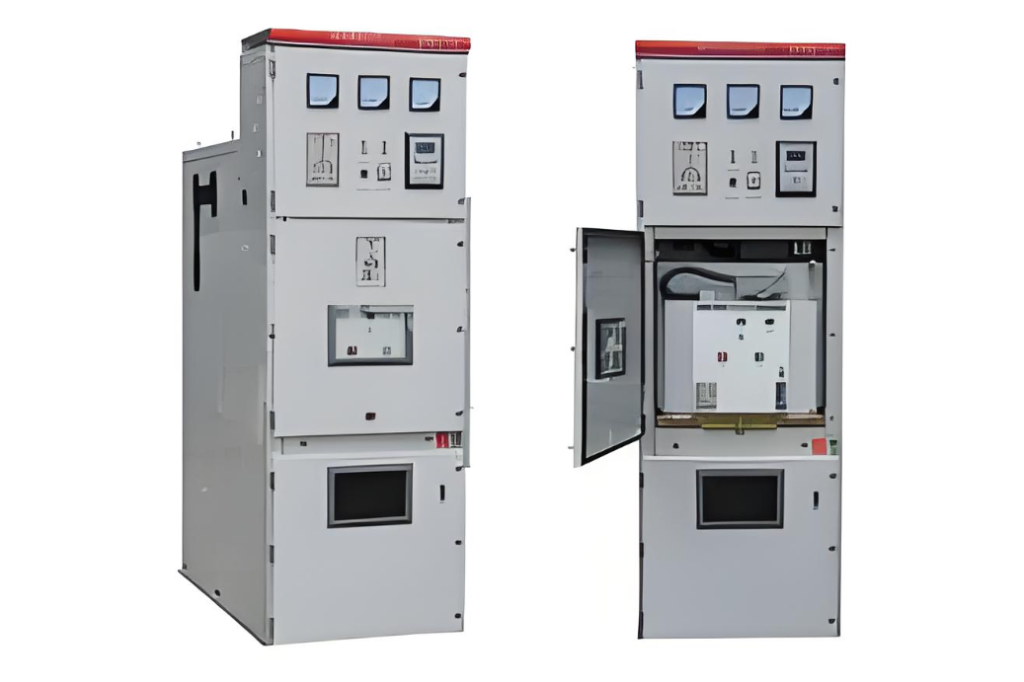
Vacuum switchgear adopts a modular integrated structure where all components perform distinct and coordinated functions, forming the foundation for stable equipment operation. The core components and their functions are listed below:
- Vacuum Circuit Breaker (VCB): The core component of the whole equipment equipped with vacuum interrupters. It undertakes circuit switching and fault arc extinction, and determines the arc extinguishing capacity and rated working condition adaptability of the switchgear.
- Disconnector: Used for electrical isolation. It forms an obvious break during equipment maintenance and circuit overhaul to eliminate risks of live-line work and protect the personal safety of maintenance personnel.
- Busbar System: Composed of main busbars and branch busbars for power transmission and distribution inside the cabinet. It adopts insulated encapsulation design to prevent inter-phase short circuits and electric leakage faults.
- Control System and Protection Devices: Integrated with microcomputer protection, operation panels and sensing elements. It monitors real-time circuit parameters including current, voltage and temperature, and triggers automatic opening protection upon overload, short circuit or electric leakage.
- Metal Cabinet: Made of cold-rolled steel plate or stainless steel with dust-proof, waterproof, anti-corrosion and anti-external-interference properties. It also provides electrical shielding to stabilize the equipment operating environment.
- Earthing System: Standardized earthing configuration that quickly discharges fault currents to avoid static accumulation and electric shock hazards, complying with power safety specifications.
3. Classification of Vacuum Switchgear
Vacuum switchgear is categorized into multiple types based on installation environment, cabinet structure and voltage class to fit various project working conditions and power distribution demands. The mainstream industry classifications are as follows:
3.1 By Installation Environment
- Indoor Vacuum Switchgear: Compact in size with protection grades suitable for indoor environments. Widely used in substations, factory power distribution rooms and building electrical rooms, it is the primary choice for civil and industrial buildings.
- Outdoor Vacuum Switchgear: Reinforced with waterproof, sun-proof, anti-corrosion and wide temperature resistance treatments for cabinets with higher protection grades. It adapts to open-air and harsh field conditions, commonly deployed in outdoor power grids, photovoltaic and wind power stations, as well as remote mining projects.
3.2 By Cabinet Structure
- Fixed-type Vacuum Switchgear: The circuit breaker is permanently installed inside the cabinet. Featuring simple structure, lower cost and strong stability, it fits power distribution scenarios with stable long-term operation and infrequent maintenance.
- Draw-out Vacuum Switchgear: The circuit breaker can be pulled out for inspection, replacement and commissioning without powering off the whole cabinet, greatly improving maintenance efficiency. It is widely adopted in core power distribution scenarios requiring uninterrupted power supply, with the KYN28 series as the representative mainstream model.
3.3 By Voltage Class
- Low-voltage Vacuum Switchgear: Applicable to low-voltage power distribution systems of 1kV and below, used for power distribution and protection of terminal electrical equipment.
- Medium-voltage (MV) Vacuum Switchgear: Designed for medium-voltage working conditions from 1kV to 52kV. It is the core choice for power transmission, distribution and industrial projects, occupying the largest market share.
4. Advantages and Disadvantages of Vacuum Switchgear
4.1 Core Advantages
- Excellent safety performance: Vacuum arc extinguishing generates no open flame or explosion risks, eliminating hidden dangers such as oil leakage and combustion of oil-immersed equipment as well as gas leakage of SF6 switchgear, leading to extremely high operational safety factors.
- Eco-friendly with zero pollution: Free of insulating oil and SF6 greenhouse gas emissions, it complies with global low-carbon and environmental protection standards for the power industry.
- Long service life: Vacuum interrupters feature exceptional stability with mechanical operation cycles reaching tens of thousands of times. The overall service life of the equipment ranges from 20 to 30 years, far longer than traditional switchgear.
- Ultra-low maintenance costs: The core components have no medium loss and require no regular replacement of arc-extinguishing media. Only routine inspections are needed, significantly cutting labor and material expenses for post-operation maintenance.
- Compact structure with strong adaptability: The cabinet occupies a small floor area to fit narrow power distribution spaces, and supports a wide range of scenarios and voltage classes.
- Efficient arc extinction: It quenches arcs within milliseconds and cuts off faults rapidly, effectively protecting downstream electrical equipment and reducing fault losses.
4.2 Existing Limitations
- Higher initial procurement cost: Precision manufacturing processes for vacuum switchgear and high-cost core components lead to higher upfront investment compared with oil-immersed switchgear.
- Limited application in extra-high voltage scenarios: Mainstream products are designed for medium and low voltage conditions, with lower market penetration than SF6 switchgear in EHV and UHV large-scale power transmission projects.
- High maintenance threshold for precision parts: Vacuum interrupters are hermetically sealed precision components that cannot be repaired on-site once faulty and must be replaced as a whole, requiring professional maintenance technicians.
5. Application Scenarios of Vacuum Switchgear
With superior comprehensive performance, vacuum switchgear has been widely deployed in power distribution systems across various industries covering public power, industrial production, infrastructure and transportation. Specific application fields are listed below:
- Power Grids and Substation Projects: Urban and rural distribution networks, regional substations and smart grid power distribution terminals. It undertakes core functions of power transmission, distribution and fault protection, serving as key equipment for power grid upgrading and transformation.
- Rail Transit and Urban Infrastructure: Subways, high-speed railways, urban tunnels and municipal power distribution projects, matching the demands of high reliability, high safety and low maintenance for core urban infrastructure.
- Oil, Gas and Chemical Industry: Oilfields, gas fields and chemical plants with explosion-proof and high-safety requirements. Its flame-free and explosion-proof features perfectly adapt to high-risk industrial environments.
- Mining and Industrial Parks: Power distribution systems for mines, manufacturing plants, industrial parks and warehousing bases, fitting long-term continuous operation and complex industrial power consumption conditions.
- New Energy Power Stations: Photovoltaic power plants, wind farms and energy storage stations. It boasts outstanding stability and adaptability to the intermittent and fluctuating power distribution characteristics of new energy generation.
6. Maintenance Specifications and Safety Guidelines for Vacuum Switchgear
6.1 Daily Maintenance Key Points
- Regularly inspect the cabinet exterior for rust, damage and dampness; clean dust and debris inside the cabinet to ensure ventilation and dryness.
- Monitor real-time operating parameters including voltage, current and temperature to identify hidden hazards such as loose wiring and overheating.
- Periodically test opening/closing actions and the sensitivity of protection devices to guarantee accurate and reliable fault response.
- For draw-out models, regularly check the flexibility of trolley movement and contact status to avoid overheating caused by poor contact.
6.2 Core Safety Guidelines
- Strictly follow the procedures of power cut, voltage test, earthing and tag hanging before equipment maintenance. Utilize the disconnector to form a visible break and prohibit live-line operations.
- Operate the equipment strictly within its rated voltage and current specifications; avoid long-term overload operation that may damage the equipment.
- The equipment is equipped with anti-misoperation interlocks to prevent illegal operations including mistaken opening/closing, closing with load and closing with earthing switch closed.
- Strengthen protection measures in humid, dusty and corrosive environments, and conduct regular insulation tests to maintain qualified insulation performance of the equipment.
7. Vacuum Switchgear Selection Guide and Retrofit Solutions for Obsolete Equipment
7.1 Key Selection Parameters and Standards
Projects should select matching equipment based on working conditions, power consumption demands and environmental factors. Core selection tips are as follows:
- Voltage class: Match low or medium-voltage series according to power distribution system requirements, prioritizing standard voltage specifications of the project.
- Rated current and short-circuit breaking current: Select parameters matching circuit load and short-circuit capacity to ensure sufficient fault bearing and breaking capacity of the equipment.
- Installation environment: Choose compact indoor models for regular indoor scenarios, and reinforced outdoor models with enhanced protection for outdoor, corrosive or dusty sites.
- Cabinet structure: Adopt draw-out switchgear for core scenarios requiring uninterrupted power supply, and fixed-type products for stable regular working conditions to control project costs.
7.2 Retrofit Recommendations for Obsolete Equipment
Traditional oil-immersed and aging SF6 switchgear suffer from prominent drawbacks including severe safety hazards, high maintenance costs and failure to meet environmental standards, making them key targets for transformation in power grid and industrial projects. Vacuum switchgear is compatible with most replacement scenarios for outdated equipment. Post-retrofit systems achieve maintenance-free operation, zero pollution and high safety, greatly reducing long-term maintenance pressure while meeting modern power industry environmental and safety standards.
Frequently Asked Questions (FAQ)
Q1: What is the main purpose of vacuum switchgear?
A1: Vacuum switchgear is mainly applied in medium and low voltage power systems to realize four core functions: power distribution, circuit switching, overload and short-circuit fault protection, as well as electrical isolation. It is widely used in power grids, industrial, transportation and new energy power distribution scenarios to guarantee the safe and stable operation of power systems.
Q2: Which is better, vacuum switchgear or SF6 switchgear?
A2: Vacuum switchgear is the preferred option for medium and low voltage power distribution thanks to its advantages in environmental protection, safety, low maintenance cost and long service life. For extra-high and ultra-high voltage large-scale power transmission projects, SF6 switchgear delivers superior insulation and arc-extinguishing performance. Selection should be determined based on voltage class and actual working conditions.
Q3: Is vacuum switchgear completely maintenance-free?
A3: It is not fully maintenance-free but maintenance-free of consumables. No replacement of arc-extinguishing media or insulating consumables is required, yet routine inspections of appearance, operating parameters and mechanical performance are necessary to eliminate hidden faults. No complex frequent maintenance is needed, leading to extremely low overall maintenance expenses.
Q4: What does medium-voltage vacuum switchgear mean?
A4: Medium-voltage vacuum switchgear refers to vacuum switch equipment designed for medium-voltage power distribution systems from 1kV to 52kV. It is the most widely used switchgear type for power grids and industrial applications, balancing performance and cost-effectiveness to fit the majority of medium-voltage power distribution conditions.
Q5: What are the core safety protection advantages of vacuum switchgear?
A5: Its key safety strengths include arc extinction without open flame or explosion risks, fully enclosed metal structure preventing electric shock and short circuits, anti-misoperation interlock protection, rapid fault power cut-off and reliable earthing protection. Multiple protection mechanisms safeguard both equipment and operating personnel.
Conclusion
As a new generation of eco-friendly power distribution equipment, vacuum switchgear addresses the safety risks and environmental defects of traditional oil-immersed and SF6 switchgear with its core strengths of reliable safety, convenient maintenance, long service life and zero pollution, making it the top choice for medium and low voltage power distribution. Boasting wide application compatibility and low comprehensive lifecycle costs, it delivers high application value and cost-effectiveness for both new power projects and upgrading renovations of outdated power distribution equipment. Driven by the intelligent and low-carbon transformation of the global power industry, vacuum switchgear will witness continuous expansion of its market coverage and serve as core supporting equipment for power distribution network upgrades.
If you would like to learn more about vacuum switchgear, please contact Fuken Electric; we will provide you with professional switchgear solutions.