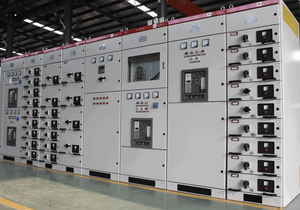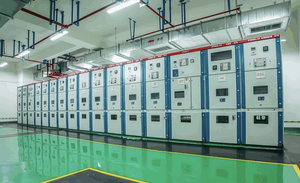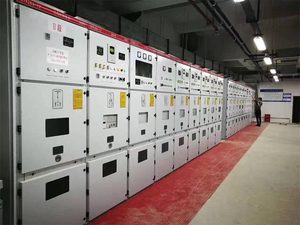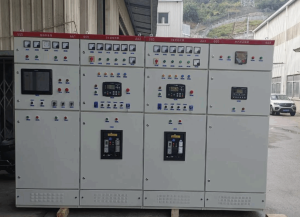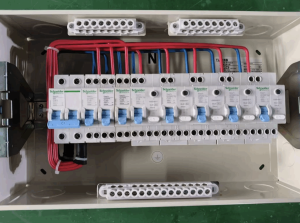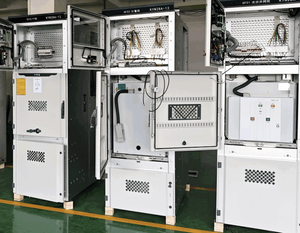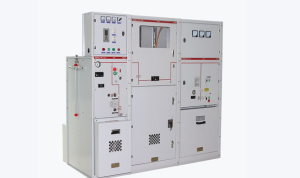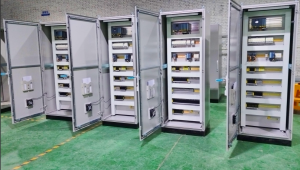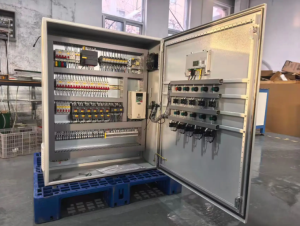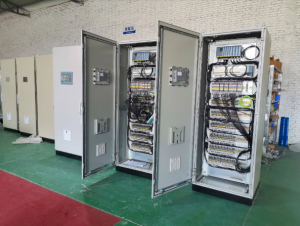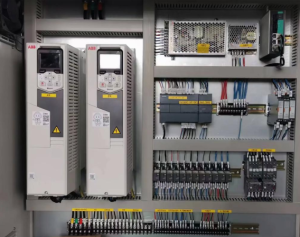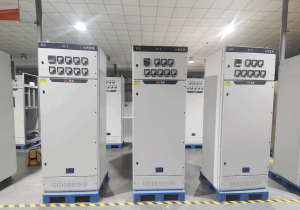
A well pump control box is an external electrical control device specially designed for submersible deep well pumps. It is primarily compatible with 3-wire submersible well pumps. The unit integrates pump start, operation and protection circuits in one enclosure. It stably regulates the operating status of the pump motor and protects the pump from damage caused by voltage fluctuations, overload, dry running and other harsh operating conditions. It is an essential accessory to ensure long-term reliable operation of deep well pumps. 2-wire deep well pumps do not require an external control box, as control components are built directly inside the pump motor.
2. How Does a Well Pump Control Box Work?
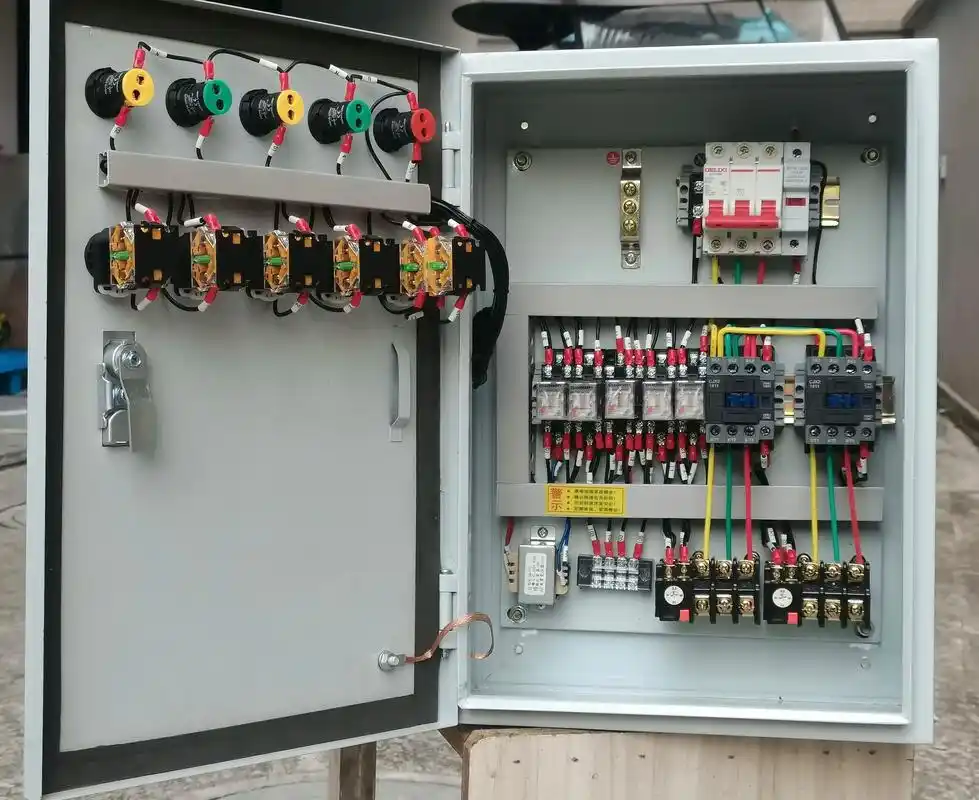
A well pump control box automatically starts and stops the pump based on water level to manage water supply and drainage. Typically, the control box consists of an electronic controller, circuit breaker, contactor, sensors, indicator lights and other components.
When the water level rises above the preset threshold, the electronic controller detects the level via the sensor and activates the pump. The pump shuts off once the water level reaches the target setpoint. Conversely, when the water level drops below the preset value, the controller turns the pump on to refill water until the desired level is reached.
3. Do You Need a Well Pump Control Box?
Not all deep well pumps require an external control box. Improper installation or omission of the unit may lead to equipment failure. Clear application rules are listed below:
Cases Where a Control Box Is Mandatory
- 3-wire submersible deep well pumps, the main pump type for external control boxes
- High-power deep well pumps of 1HP and above; large starting load requires an external control assembly for assisted startup and voltage stabilization
- Residential or rural water supply systems with unstable operating conditions and fluctuating grid voltage
Cases Where a Control Box Is Not Required
2-wire deep well pumps have built-in capacitors, control modules and protection devices. No external control box is needed; a pressure switch alone can handle pump start-stop functions. Fitting an external control box will cause circuit conflicts and equipment malfunctions.
4. 2-Wire vs 3-Wire Well Pump Control Box
Differences in control methods between 2-wire and 3-wire pumps are the most common pitfall during product selection. Their control boxes are not interchangeable. Key distinctions:
- Control structure: 2-wire pumps have no external control box; all control hardware is integrated inside the motor. 3-wire pumps must use a standalone external control box with offboard circuit control.
- Maintenance difficulty: For 2-wire pumps, internal control parts are sealed inside the pump. Repairs require pulling the whole pump out for disassembly, leading to high costs and complex work. 3-wire pumps have externally mounted control boxes. Fault diagnosis and component replacement are simple without removing the pump itself.
- Power rating suitability: 2-wire pumps are mostly low-power models under 1HP for small-scale domestic water supply. 3-wire pumps support higher power ratings for large water consumption and high-head water delivery.
- Failure rate: Built-in components of 2-wire pumps stay submerged, with higher risks of moisture ingress and aging. The control box of 3-wire pumps is installed above ground in dry, ventilated surroundings for stable operation and lower failure rates.
5. Well Pump Control Box Replacement Procedure & Costs
Replacement Criteria
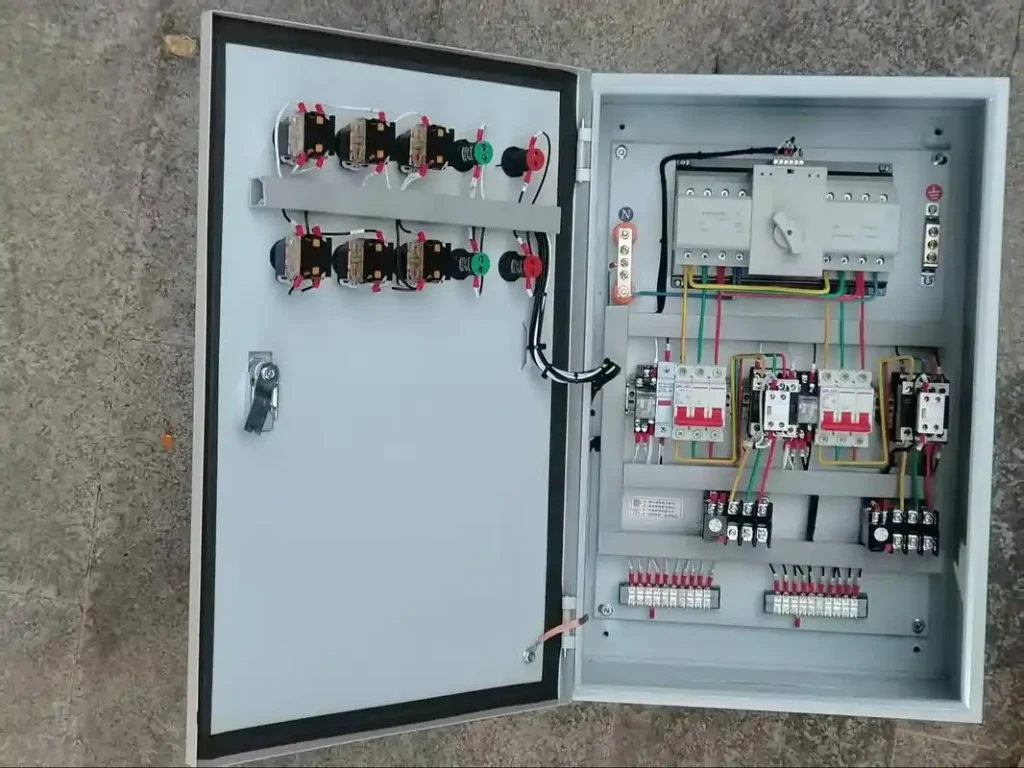
Replace the entire control box instead of repairing it if: multiple internal components burn out simultaneously, the enclosure ages and loses waterproof integrity, repeated repairs fail to deliver stable operation, or the unit has served more than 5 years. If only a single capacitor or relay fails, replacing just that component is more cost-effective.
Standard Replacement Steps
- Cut off the main power supply completely
- Label all wiring before disconnecting cables from the old control box
- Verify the new unit’s specifications match the pump requirements
- Rewire strictly following wiring standards
- Secure the enclosure and reinforce waterproof protection
- Power on and test operation
2026 Cost Reference
A standard domestic 1HP/230V well pump control box alone costs $80–$200. Full service including on-site installation and commissioning totals $200–$400. Prices rise slightly for high-power, waterproof and explosion-proof models.
6. Applications of Well Pump Control Boxes
1)Residential Water Supply: For home water systems.
Features: Low power rating, automatic control, stable operation.
2)Agricultural Irrigation
Irrigation demands: Long continuous runtime, high reliability, robust protection.
3)Industrial Water Systems
Industrial projects include factory water supply, cooling circuits and water treatment equipment.
Requirements: High-reliability control, custom engineered designs.
4)Commercial Buildings
Covers hotels, shopping malls and office buildings.
7. Standard Wiring Steps for Well Pump Control Boxes
Pre-Wiring Preparation
Cut off the main power supply and confirm full power isolation. Verify the control box voltage and horsepower match the pump (common ratings: 110V/230V, 1HP/2HP). Prepare insulated tools, waterproof terminal blocks and earthing cables to ensure safe and compliant wiring.
Full Wiring Procedure
- Connect mains power: Route live and neutral wires to corresponding terminals of the main breaker in the control box; tighten connections to avoid loose contacts and overheating.
- Attach pump cables: Connect the motor main line, start wire and common wire according to labels and the box wiring diagram. Never cross or miswire conductors.
- Wire capacitors: Differentiate start capacitor and run capacitor terminals and connect them correctly with proper positioning.
- Install earthing cable: Reliable grounding is mandatory to eliminate electric leakage hazards and improve safety.
- Wire pressure switch: Run signal wiring from the pressure switch to designated terminals on the control box to enable automatic start-stop based on water pressure.
- Close enclosure, power up and test: Run no-load test for 3–5 minutes. Check pump start/stop and running status. No abnormal noise or tripping indicates correct wiring.
8. Well Pump Control Box Buying Guide
Core purchasing principles: precise parameter matching, adequate enclosure protection and reliable internal components. Key selection points:
- Match specifications strictly: Select based on pump horsepower (1HP/1.5HP/2HP), operating voltage (110V/230V), and 2-wire / 3-wire pump type. Mismatched specifications cause malfunction or permanent equipment burnout.
- Prioritize comprehensive protection: Choose units built with overload, short-circuit, dry-run and surge protection. Ideal for rural and residential sites with volatile grid voltage for improved stability.
- Check enclosure material and waterproof rating: Metal enclosures with good dust and water sealing are preferred for outdoor or humid pump rooms to prevent moisture-related faults.
- Evaluate core component quality: Capacitors, relays and protectors are key wear parts. Industrial-grade internal components extend service life and reduce breakdown frequency.
Frequently Asked Questions
Is a well pump control box the same as a pressure switch?
No. The control box manages motor startup, voltage stabilization and circuit protection, serving as the core power control unit for the pump. A pressure switch is a sensing accessory that triggers pump start and stop according to water pressure. The two devices have distinct functions and must work together.
Can a faulty control box burn out the deep well pump?
Yes. A defective control box may deliver unstable voltage, trigger overcurrent or fail protective shutdown. Continued operation under such conditions will burn the motor winding and jam the pump assembly. Repair or replace the control box promptly once faults appear.
What is the typical service life of a well pump control box?
For standard domestic use, a quality unit lasts 3–5 years. It can reach 5–8 years under dry environments, stable voltage and regular maintenance. Humid locations or severe voltage fluctuations accelerate component aging and shorten service life.
Conclusion
A well pump control box is the core protection and control assembly for 3-wire high-power deep well pumps, directly determining pump running stability and service lifespan.
Before use, confirm compatibility between your pump model and control box. Complete installation and wiring following standard procedures. Quickly diagnose faults in daily operation and choose component repair or full replacement as appropriate. When purchasing, focus on specification matching, protective features and component quality. This approach minimizes pump failures, cuts long-term maintenance costs and guarantees stable operation of domestic water supply systems.