1. What Is Data Center Switchgear
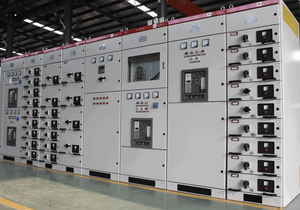
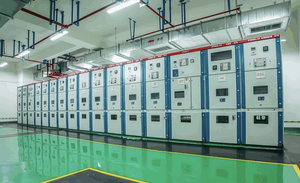
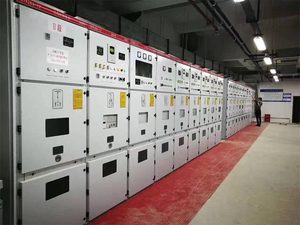
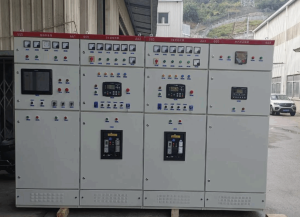
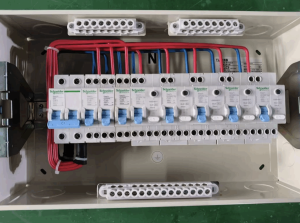
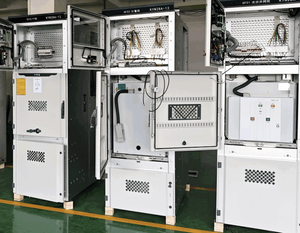
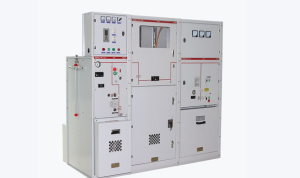
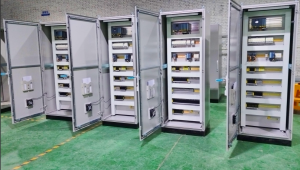
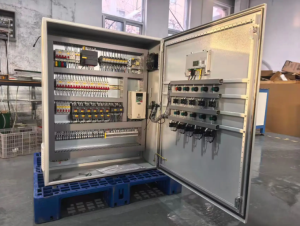
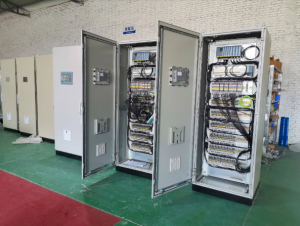
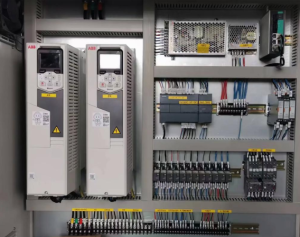
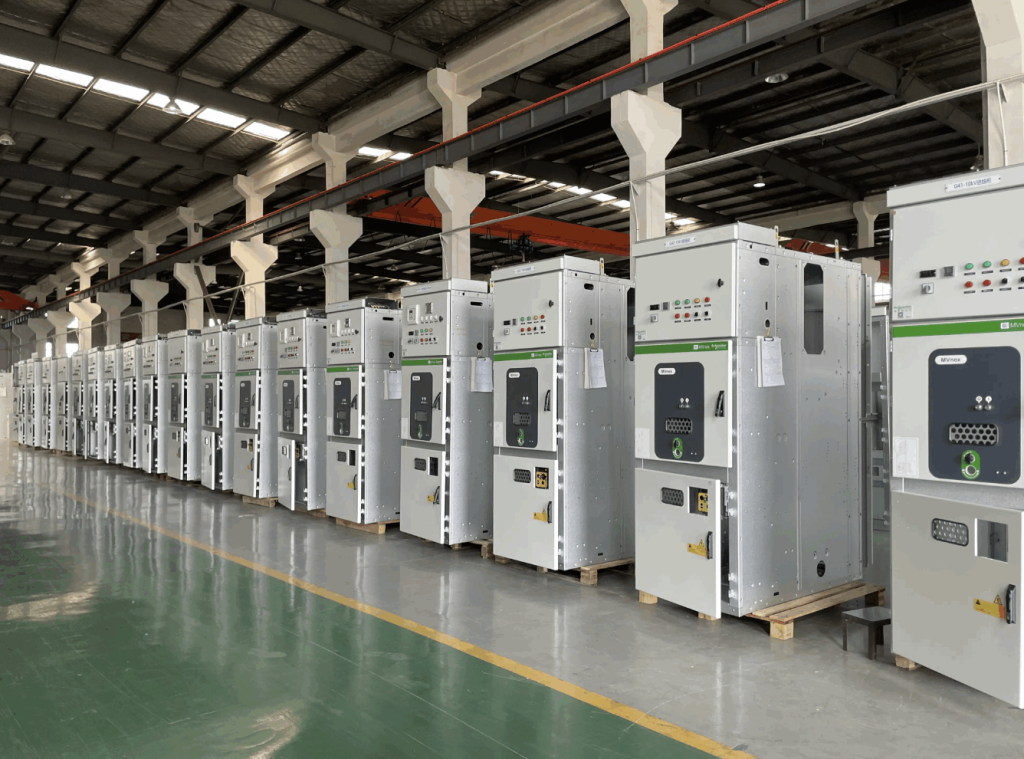
Data center switchgear serves as the core backbone equipment of a data center power distribution system. It is a complete set of power distribution assemblies integrating circuit breakers, busbars, protective relays, safety enclosures and other key components for receiving, distributing, regulating and protecting electric power. Unlike conventional power distribution equipment for buildings, data center switchgear is engineered for 24/7 continuous operation in computer rooms. It precisely meets strict requirements for high reliability, low failure rates and redundant power distribution, and effectively prevents server outages and equipment damage caused by power failures such as blackouts, overloads, short circuits and power surges. It is the fundamental facility that guarantees stable and secure power supply for data centers.
Within the complete power architecture of a computer room, data center switchgear receives power from utility mains, diesel generators and UPS systems. It feeds power downstream to terminal distribution equipment including busbar trunking systems and PDUs, forming a closed-loop controllable power distribution framework. It is widely deployed in hyperscale cloud data centers, enterprise private data centers, colocation facilities and edge computing data centers.
2. Why Data Centers Require Dedicated Switchgear
Most general-purpose switchgear for civil and industrial applications is designed for intermittent power consumption scenarios and cannot satisfy the stringent operational requirements of data centers. This is the core reason why data centers must deploy dedicated switchgear, and the distinctions directly determine the stability and safety of computer room power systems.
First, operational stability requirements differ significantly. Data centers operate 365 days a year without interruption, and allow extremely limited downtime for core business. Dedicated data center switchgear undergoes rigorous testing for continuous electrification, high-temperature resistance and anti-aging performance, enabling stable operation under sustained full loads. In contrast, conventional switchgear is designed for daytime operation with nighttime shutdowns. Long-term nonstop operation will easily trigger component aging and protection malfunctions.
Second, there are major gaps in fault tolerance and redundant design. Dedicated data center switchgear supports dual power switching and redundant distribution architectures, enabling isolation of single-point faults without triggering overall power outages caused by failures on individual circuits or equipment. Ordinary switchgear mostly adopts single-circuit layouts; faults will directly lead to regional power loss and fail to satisfy high-availability requirements for computer rooms.
Finally, dedicated switchgear implements higher safety protection standards. Optimized for precision electronic IT hardware in data centers, it delivers enhanced protection against short circuits, power surges, instantaneous overload tripping and arc flash hazards. It also adapts to constant temperature & humidity environments and high-density wiring inside computer rooms. Conventional switchgear falls short in protection ratings, fault response speed and environmental adaptability. Using such equipment poses severe risks of hardware damage and data loss for precision IT loads.
3. Types and Applicable Scenarios of Data Center Switchgear
Classified by voltage level and intelligence level, data center switchgear falls into three primary categories: low-voltage switchgear, medium-voltage switchgear and intelligent digital switchgear. Each category features distinct parameters and applicable scenarios, forming critical reference standards for designing computer room power distribution schemes.
3.1 Low-Voltage (LV) Switchgear
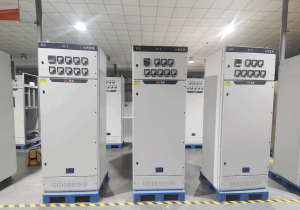
Low-voltage switchgear has a rated voltage ≤1000 V. It is mainstream terminal distribution equipment for small and medium-sized data centers. Common models include GCS and GGD series, complying with GB/T 7251 national standards and IEC 60439 international standards. Featuring compact structure, flexible wiring and convenient maintenance, it is mainly deployed on the load side of UPS systems, for floor-level power distribution and cabinet terminal power supply. It fits enterprise private data centers, small-to-medium colocation facilities and edge computing data centers with moderate power loads. Its key advantages include strong adaptability, controlled costs and simple fault diagnosis, meeting basic redundant power distribution demands of small and medium computer rooms.
3.2 Medium-Voltage (MV) Switchgear
Medium-voltage switchgear covers rated voltages from 3.6 kV to 40.5 kV and complies with the updated GB 3906-2026 standard for high-voltage equipment. It is deployed in the upstream medium-voltage distribution links of hyperscale data centers and large cloud computing campuses, responsible for utility power intake, medium-voltage power allocation and management of large-capacity loads. Compared with low-voltage alternatives, medium-voltage switchgear delivers superior short-circuit withstand capability, higher load capacity, enhanced insulation performance and upgraded arc flash protection. It supports stable power supply for megawatt-scale computer rooms and acts as core power equipment for hyperscale data centers and large campus-style data centers.
3.3 Core Differences Between LV and MV Switchgear
In terms of voltage class: low-voltage equipment handles refined terminal distribution, while medium-voltage equipment manages large-capacity upstream power distribution.
For load capacity: medium-voltage switchgear supports megawatt-level heavy loads, whereas low-voltage units suit smaller load scenarios.
In system hierarchy: medium-voltage switchgear sits at the front end of distribution systems, connecting utility mains and main generators; low-voltage equipment is positioned downstream to supply terminal IT hardware.
From maintenance perspective: medium-voltage switchgear demands stricter specifications for insulation, explosion prevention and protection, requiring higher professional expertise for maintenance.
3.4 Intelligent Digital Switchgear
Intelligent switchgear represents the new generation of dedicated power distribution hardware for data centers. Built upon traditional LV/MV switchgear, it integrates IoT monitoring, AI-driven fault early warning, remote control and data traceability functions. It continuously monitors real-time metrics including current, voltage, temperature and load conditions, and predicts potential risks such as component degradation, circuit overload and latent short circuits to realize advance warning and precise fault localization. Currently widely adopted in premium hyperscale data centers and Tier 3 / Tier 4 high-availability computer rooms, it stands as a trending product enabling intelligent and energy-efficient upgrades for data center power distribution systems.
4. Core Functions and Working Principles of Data Center Switchgear
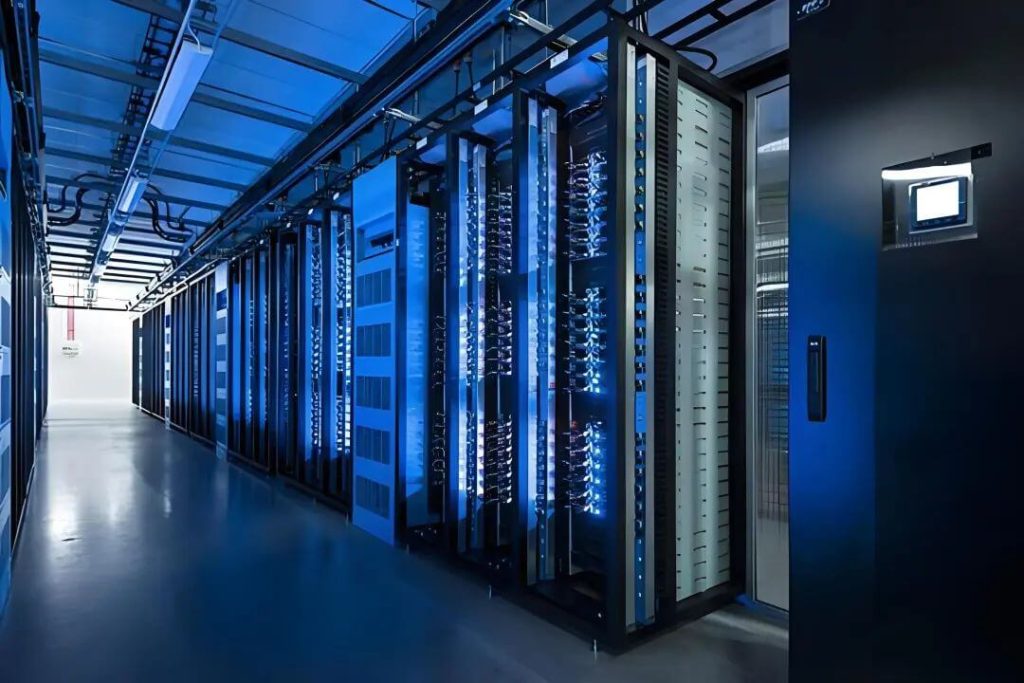
Data center switchgear is far more than simple power transmission hardware. It operates as an intelligent power distribution hub integrating power allocation, safety protection, control and system coordination. Its core functions cover load management, power safety protection and system interconnection.
4.1 Refined Power Distribution and Load Management
Switchgear distributes power received from utility mains and backup power sources to different floors and cabinet clusters according to computer room load requirements. It continuously monitors load conditions on each circuit and automatically balances power loads to avoid overload on individual circuits, stabilizing the overall distribution system and supporting power demands of high-density server racks.
4.2 Comprehensive Power Safety Protection
Equipped with multi-layer protection mechanisms against overload, short circuit, surge and earth leakage, it can isolate faulty circuits within milliseconds once abnormal operating conditions emerge. It prevents fault propagation across the whole power system, maximizes protection for precision IT hardware such as servers and storage devices, and eliminates equipment damage and data loss triggered by power faults. New-generation units further incorporate arc flash protection to lift safety standards for computer room power distribution.
4.3 Fault Isolation and System Stability Assurance
Thanks to modular and circuit-separated design, switchgear supports independent isolation of faulty circuits. Maintenance on malfunctioning circuits can proceed without disrupting normal circuits, sustaining core business operations of data centers and perfectly matching the zero-downtime operational requirements.
4.4 Coordination Logic with UPS, Generators and ATS
Within a complete computer room power distribution architecture, switchgear serves as the central interconnection hub. Under normal operating conditions, switchgear receives utility mains and delivers regulated power to IT loads. When utility power fails, the Automatic Transfer Switch (ATS) switches power instantaneously, and switchgear coordinates with UPS systems to release emergency power for uninterrupted operation of core hardware. For prolonged outages, switchgear automatically connects to diesel generators to complete backup power access and load transfer. The whole process achieves seamless power switching and eliminates power outage risks.
5. Application Scenarios of Data Center Switchgear
Data centers of varying scales and positioning impose distinct requirements on switchgear voltage class, redundancy design and intelligent configuration. Precise matching with scenario requirements is critical for power distribution scheme design.
5.1 Hyperscale Data Centers
Cloud computing bases and large campus data centers feature massive power loads. Their power distribution architectures adopt medium-voltage switchgear as primary equipment supplemented by low-voltage switchgear, paired with intelligent monitoring systems and dual-redundant power layouts. This setup satisfies demands for large capacity, high stability and remote controllability, supporting 24/7 operation under heavy continuous loads.
5.2 Enterprise Private Data Centers
Deployed to host internal business systems and data storage services for enterprises, these facilities carry moderate power loads. Low-voltage switchgear serves as core distribution hardware. Basic redundant design balances stability and cost-effectiveness for small and medium enterprise computer rooms and on-premises data centers.
5.3 Colocation Data Centers
Colocation facilities must accommodate diversified power demands from multiple tenants. Power distribution systems require flexible expandability, independent circuit management and accurate load metering. Modular switchgear combining LV and MV units is commonly deployed, enabling on-demand power resource allocation and independent fault isolation to ensure non-interfering operations for different tenants.
5.4 Edge Computing Data Centers
Edge computer rooms are distributed in buildings and industrial parks with limited space and relatively light loads. Compact intelligent low-voltage switchgear is preferred, featuring small footprint, simplified maintenance, remote monitoring and low energy consumption to fit lightweight, distributed deployment of edge infrastructure.
6. Selection Standards for Data Center Switchgear
Selection of data center switchgear requires comprehensive evaluation based on computer room scale, load demand, availability tier and maintenance capacity. Five core selection dimensions help avoid problems including insufficient stability, poor expandability and excessive maintenance costs caused by improper equipment selection.
6.1 Match Voltage Class with Data Center Scale
Small edge computer rooms and enterprise private data centers prioritize low-voltage switchgear. Large colocation facilities may adopt hybrid LV/MV architectures. Hyperscale cloud data centers must deploy medium-voltage switchgear as primary equipment to satisfy massive power load requirements and prevent frequent failures resulting from insufficient capacity of low-voltage hardware.
6.2 Prioritize Redundancy and Reliability
Data centers rated Tier 3 and above must adopt modular switchgear supporting dual redundant power distribution, equipped with single-point fault isolation and maintainability without system shutdown. This eliminates full outages triggered by single-point failures and guarantees 99.999% availability for computer room operations.
6.3 Match Intelligent Monitoring Capabilities
Large-scale intelligent computer rooms require intelligent switchgear equipped with AI fault warning, remote monitoring and data traceability functions. Real-time upload of operational metrics and predictive fault identification reduce manual maintenance workload and improve automation levels of power distribution management.
6.4 Strictly Control Safety and Environmental Adaptability
During equipment selection, verify protection ratings, insulation performance, arc flash resistance and high-temperature endurance. Ensure hardware adapts to constant temperature & humidity, high-density wiring and long-duration full-load operating environments inside data centers while complying with national and industrial standards.
6.5 Evaluate Manufacturer Qualifications and After-Sales Support
Give priority to manufacturers with formal production qualifications for complete power distribution equipment and abundant industry project references. Assess equipment warranty policies, on-site maintenance support, fault response speed and spare parts supply to guarantee stable long-term equipment operation and rapid fault resolution.
7. Daily Maintenance Scheme for Data Center Switchgear
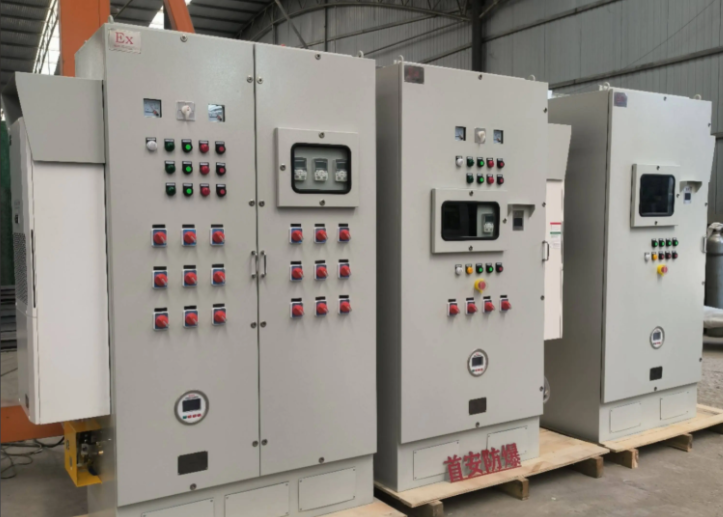
Standardized maintenance extends equipment service life and reduces failure probability. Combined with industry maintenance specifications, a standardized system covering routine inspection, maintenance and fault handling can be established.
7.1 Routine Inspection & Maintenance Checklist
Daily inspections verify operating temperature, current and voltage readings, tightness of wiring terminals, and check cabinets for abnormal noise, odors or leakage risks. Quarterly tasks include circuit load calibration, functional testing of protective relays and insulation testing for busbars. Annual deep maintenance covers overall equipment overhaul, aging component screening and protection performance testing. Timely replacement of degraded components maintains stable operating conditions.
7.2 Common Faults and Quick Solutions
For overload tripping: audit load distribution across circuits and optimize power allocation to avoid sustained overloading.
For short-circuit faults: isolate faulty circuits rapidly, identify damaged cables or defective hardware, and restore power after remediation.
For abnormal temperature rise: inspect heat dissipation systems and loose terminals, clean cabinet dust and fasten wiring connections.
For abnormal monitoring data: troubleshoot sensors and communication modules to ensure proper operation of intelligent monitoring systems.
7.3 Core Practices to Extend Equipment Service Life
Maintain clean computer room environments with stable temperature and humidity to prevent dust accumulation and corrosion caused by moisture. Operate hardware strictly within rated load limits and avoid persistent overload and frequent startup/shutdown cycles. Calibrate protection parameters periodically to prevent protection malfunctions. Establish complete equipment operation logs recording operational data, fault records and maintenance histories to realize full-lifecycle management.
Conclusion
Data center switchgear constitutes the core hub of computer room power distribution systems, directly determining power supply stability, operational safety and business continuity of data centers. Distinct from ordinary power distribution hardware, dedicated data center switchgear integrates high redundancy, enhanced protection, system coordination and intelligent monitoring capabilities, perfectly adapting to rigorous 24/7 operating conditions of computer rooms. When designing power schemes, selecting equipment and organizing maintenance, stakeholders should follow industry standards, match LV/MV equipment types and configurations according to facility scale, availability tier and scenario demands, and implement regular maintenance workflows. Leveraging intelligent hardware and standardized management practices, operators can comprehensively boost reliability, safety and energy efficiency of data center power distribution infrastructure, laying a solid power foundation for stable operation of core IT services.
For more information about switchgear, please contact Fuken. We will provide you with professional switchgear solutions.
References
- GB/T 7251.1-2026 Low-voltage switchgear and controlgear assemblies — Part 1: General specifications
- GB/T 7251.10-2025 Low-voltage switchgear and controlgear assemblies — Part 10: Guide for selection of assemblies
- GB 3906-2026 Alternating current metal-enclosed switchgear for rated voltages from 3.6 kV up to 40.5 kV