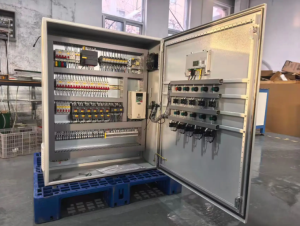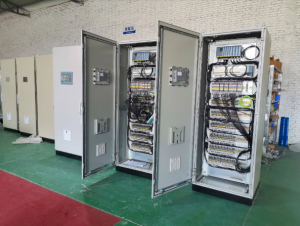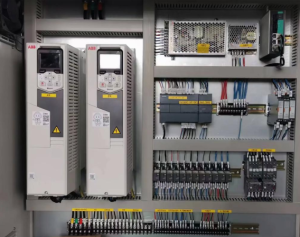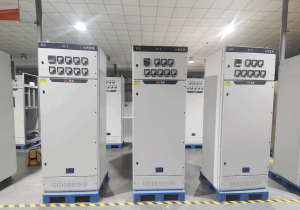
Plastic distribution boxes, also commonly referred to as plastic distribution enclosures or plastic electrical housings, are widely‑used modular devices in low‑voltage power distribution systems. They are applied in residential buildings, commercial premises, outdoor projects, photovoltaic supporting facilities and light‑duty industrial scenarios. This article covers basic concepts, housing materials, product classification, key technical parameters, enclosure comparisons, installation & maintenance, and procurement selection, helping on‑site engineering teams quickly evaluate and select suitable products.
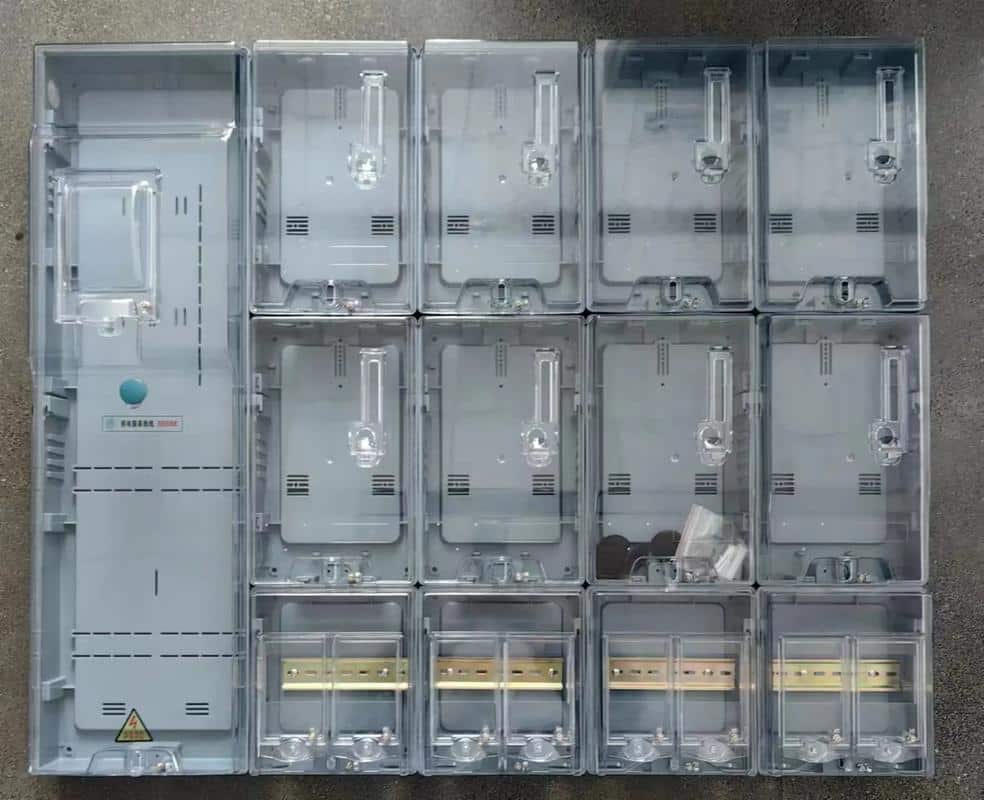
1. What Is a Plastic Distribution Box
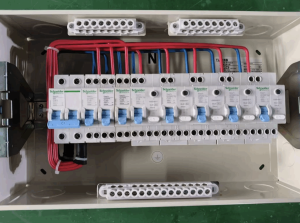
A plastic distribution box features an engineering‑plastic main enclosure for low‑voltage power distribution. Its core function is to house electrical protection components, enable circuit branching, and deliver insulation protection via the housing. It prevents accidental human contact with live parts and stops dust and moisture from damaging internal electrical components.
Core Functions
- Power Distribution: Split the main incoming power supply into multiple output branches for different loads.
- Safety Isolation: The insulating housing reduces electric‑shock risks and shields internal circuit breakers and terminals from external damage.
- Standardized Mounting: Compatible with modular MCBs and RCD residual‑current devices for convenient inspection and component replacement.
Main Components
Plastic enclosure, transparent inspection window, DIN rail, neutral bar, earth bar, sealing gaskets, knock‑out cable entries, and locking assemblies.
Difference Between Plastic Distribution Boxes and Junction Boxes
Many procurement personnel confuse distribution boxes with junction boxes. A junction box is mainly used for cable splicing and transition and generally does not accommodate numerous circuit breakers. A plastic distribution box is designed to mount multiple protective switches and implement power distribution with multi‑loop output. Although both can reach identical ingress‑protection ratings, they differ completely in internal structure, DIN‑rail configuration and application purposes and cannot replace one another in engineering procurement.
2. Housing Materials for Plastic Distribution Boxes
Three mainstream materials are adopted for plastic distribution‑box housings: ABS, PC polycarbonate, and blended ABS‑PC. Their performance in UV resistance, impact resistance, flame retardancy and temperature tolerance varies significantly, determining whether enclosures fit indoor or outdoor deployment.
- ABS Engineering Plastic ABS offers moderate cost, favorable processability and good rigidity with reliable flame‑retardant performance, performing stably in indoor environments. Its main drawback is poor UV resistance; prolonged outdoor exposure causes ageing, brittleness and cracking. It is preferred for residential premises, office buildings and indoor workshops. Operating temperature ranges from ‑40 ℃ to 80 ℃, with a glow‑wire temperature of approximately 650 ℃.
- PC Polycarbonate PC polycarbonate delivers outstanding impact resistance, low‑temperature tolerance and excellent UV stability, making it suitable for open‑air outdoor sites and coastal high‑salt‑fog environments. Its flame‑retardant grade is slightly lower than ABS, and it tends to soften under high temperatures. For outdoor applications, select UV‑modified PC enclosures. Its working temperature spans ‑50 ℃ to 120 ℃, ideal for rainy and sun‑exposed open‑air conditions.
- ABS‑PC Blended Material This composite combines the flame‑retardant merit of ABS and the impact‑resistance & weather‑resistance advantages of PC. With balanced overall performance and reasonable cost, it is the mainstream economical choice for outdoor plastic distribution boxes.
| Material | UV Resistance | Impact Resistance | Flame Retardancy | Application Scenarios |
|---|---|---|---|---|
| ABS | Poor | Moderate | Excellent | Dry indoor environments |
| PC Polycarbonate | Excellent | Superior | Good | Open‑air outdoors, coastal regions |
| ABS‑PC Blend | Good | Good | Good | Indoor, semi‑outdoor, cost‑sensitive outdoor projects |
3. Classification of Plastic Distribution Boxes
3.1 By Mounting Method
- Surface‑mount: Fixed directly onto wall surfaces. Simple installation, preferred for renovation projects without wall chiselling.
- Flush‑mount (recessed): Embedded inside walls for neat appearance, widely used in new residential construction; pre‑cut wall recesses are required during installation.
3.2 By Application Scenario
- Residential indoor distribution boxes: For household power distribution, normally covering 2‑12 circuits.
- Outdoor waterproof plastic distribution boxes: IP65 / IP66 ratings, deployed in open‑air factory yards and photovoltaic projects.
- Light‑duty industrial plastic distribution boxes: For workshops and temporary construction‑site power distribution.
- PV‑special plastic distribution boxes: Designed for DC‑side combiner and protection components in photovoltaic systems.
3.3 By Modular Circuit Count
Common specifications: 2‑way, 4‑way, 6‑way, 8‑way, 12‑way, 18‑way, 24‑way. The circuit number indicates the maximum quantity of modular switches that can be installed. Reserve 1‑2 spare circuits during procurement for future expansion and retrofitting.
3.4 By Power‑supply Phase
- Single‑phase plastic distribution boxes: For residential and small‑commercial 230 V AC systems.
- Three‑phase plastic distribution boxes: Applicable to 400 V three‑phase power distribution. Provided that rated voltage and current parameters are satisfied, plastic enclosures support three‑phase systems. Matching three‑phase switches and copper bars must be fitted, and load balancing shall be strictly implemented.
4. Key Specification Parameters for Selection
4.1 IP Ingress‑Protection Rating
IP ratings follow IEC 60529. The first digit represents dust protection, and the second denotes water resistance — one of the most critical selection indicators.
- IP30: Suitable only for dry indoor distribution rooms and electrical shafts; dust‑proof but not water‑proof.
- IP54: Dust‑protected and splash‑proof from all directions, for semi‑outdoor locations and ordinary workshops; not resistant to high‑pressure water jets.
- IP65: Dust‑tight and protected against low‑pressure water jets, the mainstream rating for open‑air and photovoltaic projects.
- IP66: Dust‑tight and resistant to high‑pressure water jets, for harsh outdoor sites with heavy dust or frequent equipment washing.
Note: IP ratings refer to factory‑tested performance. Sealing gaskets degrade over service time for outdoor enclosures, which will reduce actual ingress‑protection performance without regular inspection.
4.2 Rated Voltage and Rated Current
Standard plastic distribution boxes are rated for 400 V AC. The maximum continuous current shall match internal copper bars and terminal blocks; do not operate beyond the enclosure’s marked maximum current rating.
4.3 Safety‑Certification Standards
For export‑oriented projects, verify CE marking and compliance with IEC 60670‑1 and IEC 61439. For domestic projects, check flame‑retardant and insulation performance. Avoid low‑cost uncertified enclosures, which may incur fire hazards.
4.4 Flame Retardancy and UV Resistance
Prioritize flame‑retardant grades for indoor applications. UV resistance is mandatory for outdoor deployment; ordinary ABS exposed outdoors will turn brittle and crack within 2‑3 years.
4.5 IK Impact‑Resistance Rating
The IK code defines mechanical‑impact resistance. For outdoor construction sites or locations prone to knocks, select enclosures of IK08 or higher.
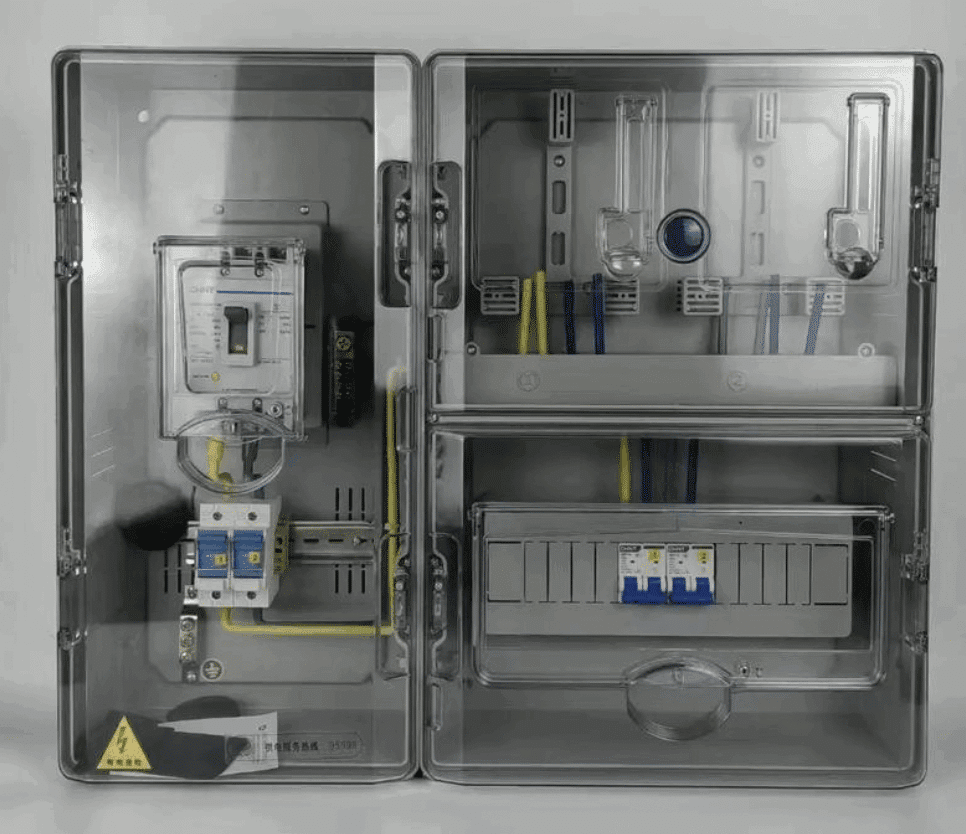
5. Plastic Distribution Boxes vs Metal Distribution Boxes
Neither type is universally superior; selection depends on working conditions.
Advantages of Plastic Distribution Boxes
- Inherently insulating housing; no housing earthing required, reducing construction workload.
- Light‑weight for easy handling and installation.
- Rust‑free, delivering outstanding corrosion resistance in humid and coastal salt‑fog environments.
- Knock‑out holes allow simple on‑site modification.
- Lower procurement cost, favourable for large‑scale project budgeting.
Disadvantages of Plastic Distribution Boxes
- Inferior high‑temperature resistance compared with metal enclosures; avoid locations adjacent to intense heat sources.
- Ordinary ABS lacks UV stability outdoors; UV‑modified grades are required for open‑air use.
- Less resistant to heavy mechanical impacts; heavy blows may crack the housing.
Advantages of Metal Distribution Boxes
High mechanical strength, impact resistance and high‑temperature tolerance, suited for high‑temperature workshops and areas with high impact risks.
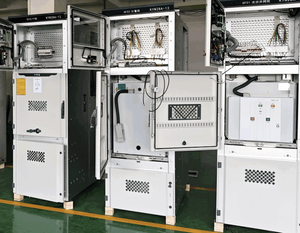
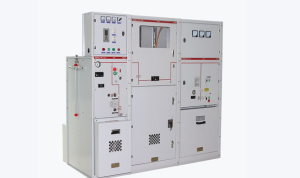
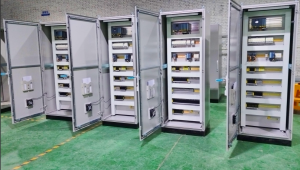
Disadvantages: Conductive housing requires reliable earthing; corrosion may occur in humid environments unless coated with anti‑corrosion paint; heavier weight and higher overall cost.
Selection Recommendation: Qualified modified‑plastic enclosures are preferred for humid coastal sites, residential buildings and ordinary outdoor conditions. Metal enclosures are recommended for high‑temperature industrial zones with high risk of heavy mechanical impact.
6. Installation and Routine‑Maintenance Guidelines for Plastic Distribution Boxes
Installation Guidelines
- Mount the enclosure securely and horizontally. For flush‑mount units, ensure tight fitting against wall surfaces without large gaps.
- For outdoor installation, adopt IP65‑rated or higher enclosures. Fit waterproof cable glands for knock‑out entries and cable ports; do not leave openings uncovered.
- Reserve heat‑dissipation clearance around enclosures; avoid full enclosure to prevent internal heat accumulation.
- Arrange internal wiring neatly. Tighten terminal blocks according to specified torque values; complete neutral and earth bars shall be equipped.
- Installation must be performed by qualified electricians under power‑off conditions. Never open covers with live power.
Routine‑Maintenance Checklist
- Cut off power before cleaning internal dust; accumulated dust degrades insulation and may trigger short‑circuits.
- Inspect sealing gaskets quarterly for ageing or cracking on outdoor units.
- Check terminals for heating and loose connections.
- Periodically test tripping functions of residual‑current devices.
- Keep drainage holes of outdoor boxes unobstructed to prevent water accumulation inside enclosures.
7. Step‑by‑step Selection Workflow for Plastic Distribution Boxes
- Confirm operating environment: dry indoor / semi‑outdoor / open‑air coastal site.
- Determine required IP ingress‑protection and IK impact‑resistance ratings according to site conditions.
- Count actual circuit‑breaker quantities and add 1‑2 spare circuits.
- Select ABS, PC or blended ABS‑PC material for indoor or outdoor deployment accordingly.
- Verify rated voltage, rated current and valid safety certifications.
- Evaluate project budget, balancing procurement and long‑term maintenance costs.
Frequently Asked Questions
Q1: What are the main applications of plastic distribution boxes?
A1: They are deployed in residential, commercial and light‑industrial settings to house circuit breakers, distribute low‑voltage circuits, provide overload and short‑circuit protection, and deliver personnel safety protection via enclosures.
Q2: What IP rating should outdoor plastic distribution boxes adopt?
A2: Minimum IP65 for open‑air rain‑exposed locations; IP66 for scenarios subject to high‑pressure water washing. IP30 suffices for ordinary indoor use.
Q3: Can plastic distribution boxes be used for three‑phase power supply?
A3: Yes, provided enclosure rated voltage and current match the 400 V three‑phase system. Fit matching three‑phase switches and implement three‑phase load balancing. The insulating plastic housing itself works properly.
Q4: Can plastic distribution boxes be buried directly underground?
A4: Standard models are not designed for direct burial. Special burial‑rated enclosures are required; regular IP65 units are for wall‑mounted outdoor installation only.
Q5: What is the typical service life of plastic distribution boxes?
A5: Qualified indoor ABS enclosures can serve 15‑20 years. UV‑modified PC outdoor enclosures achieve 8‑15 years with proper maintenance. Ordinary ABS units exposed to open‑air sunlight age rapidly with greatly shortened service life.
Q6: Which material is better for distribution boxes: ABS or PC?
A6: ABS offers cost‑effectiveness for dry indoor environments. UV‑modified PC is preferred for open‑air outdoor and coastal sites.
Q7: What is the difference between distribution boxes and junction boxes?
A7: Distribution boxes mount circuit breakers and implement multi‑way power distribution. Junction boxes are for cable splicing and transition and normally do not accommodate many protective switches.
Conclusion
Featuring good insulation, corrosion resistance, easy installation and high cost‑effectiveness, plastic distribution boxes have become mainstream enclosures within low‑voltage power‑distribution systems. Product selection should not rely merely on price comparison. Material choice, IP ingress‑protection rating, circuit quantity and safety certifications shall be determined based on practical operating conditions. ABS enclosures are suitable for indoor applications, while UV‑resistant PC or blended ABS‑PC products shall be adopted for outdoor projects.
For technical support and quotations for standard or custom‑specification plastic distribution boxes, please contact FUKEN for assistance.
Reference Documents
- IEC 60529: Degrees of protection provided by enclosures (IP Code)
- IEC 60670‑1: Boxes and enclosures for electrical accessories for household and similar fixed electrical installations
- IEC 60670‑24: Enclosures for housing protective devices