Within a complete septic tank wastewater disposal system, the concrete distribution box (D‑box) acts as the critical junction connecting the septic tank to the leach field. Premature failure of many residential septic systems often stems not from damage to the septic tank itself, but from malfunctioning distribution boxes that cause uneven wastewater distribution, which accelerates clogging and premature failure of the leach field. This article comprehensively covers engineering knowledge of concrete septic distribution boxes, including working principles, specification‑based selection, construction and installation, material comparisons, cost estimating, troubleshooting, and routine maintenance, to support proper product selection, installation, and fault diagnosis.
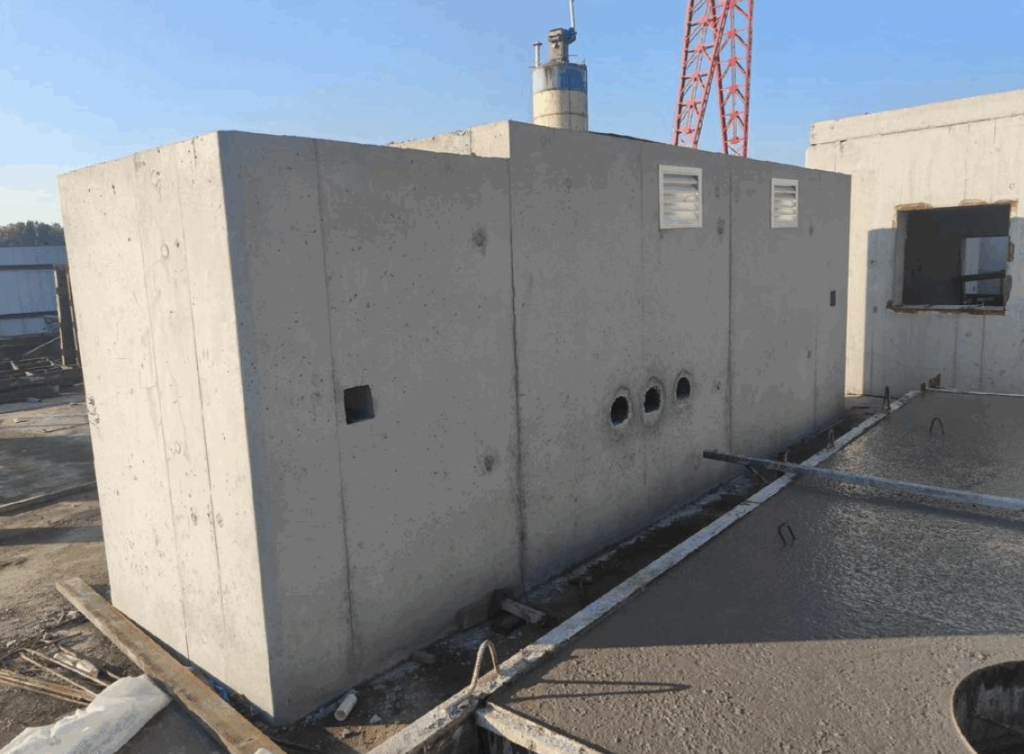
1. Working Principle of Concrete Septic Distribution Boxes
Wastewater flows through the system in the following sequence: domestic wastewater enters the septic tank for solid‑liquid separation. Pretreated clarified effluent exits the septic tank and flows into the inlet of the concrete distribution box. It is then evenly diverted through multiple outlets set at identical elevations inside the box and delivered to individual lateral pipes of the leach field. This achieves uniform water distribution across the leach field and prevents overloading and sludge accumulation in individual laterals.
Absolute level installation of the box is the core prerequisite for proper function. If the box settles or tilts, height differences will occur among outlet ports. Most wastewater will discharge through the lowest outlets, overloading certain leach laterals while others receive almost no flow. This results in localized soil saturation, surface ponding, and sewage odors, drastically shortening the overall service life of the leach field.
A standard precast concrete distribution box consists of a main tank body, access cover, inlet port, and multiple outlet ports. Internal flow baffles stabilize water flow and reduce direct passage of solid debris into leach piping.
2. Specification Parameters and Selection Guidelines
For North‑American residential septic installations, concrete for distribution boxes shall have a minimum compressive strength of 4000 PSI. This requirement is mandated by health department codes in most jurisdictions to resist earth pressure, groundwater attack, and overburden loads. Two construction options are available: precast concrete and cast‑in‑place. Precast units are preferred for most projects for consistent factory‑controlled quality. Cast‑in‑place construction is reserved for non‑standard special conditions; it requires longer construction time and quality depends heavily on on‑site workmanship.
Key Selection Criteria
- Number of outlets: Common residential configurations include 2‑port, 4‑port, and 6‑port models. Outlet count must match the number of leach‑field laterals, which is the primary driver for distribution‑box sizing.
- Port standards: All outlets must sit at the same elevation with uniform port dimensions. Outlet invert elevation shall be at least 25 mm lower than the inlet invert to satisfy gravity‑flow drainage requirements.
- Cover assembly: Matching concrete access covers are required to enable inspection and jetting. Covers must be rated for the imposed overburden load.
- Selection basis: Do not size the box solely by house square footage. Prioritize matching the number of leach‑field laterals, together with bedroom count and estimated daily wastewater volume. Always follow local health‑department codes, which supersede general industry practice.
Important note: Avoid undersized distribution boxes. Undersized units are prone to debris accumulation and clogging, driving up long‑term maintenance costs.
3. Installation Best Practices of Concrete Septic Distribution Boxes
Installation quality directly governs system service life. Many system failures originate from poor installation practices.
- Burial depth: In frost‑free zones, cover the box with 300‑600 mm of soil. In cold frost‑prone regions, set the entire box below the frost line to prevent frost heave‑induced shifting and cracking. In minimally‑frost areas such as California, minimum soil cover shall be no less than 300 mm for protection and accessibility.
- Base preparation: Place the unit on compacted crushed‑stone bedding over undisturbed native soil. Do not set the box on loose backfill to prevent differential settlement and tilting.
- Leveling control: Use a spirit level throughout placement. Verify levelness a second time before backfilling, as proper leveling is the most critical construction checkpoint.
- Location: Install between the septic‑tank outlet and the start of the leach field. Locate it reasonably close to the septic tank for convenient future service.
- Backfilling: Perform layered backfill. Remove large rocks from fill material and compact each layer. Do not allow heavy equipment to drive directly over the box. After backfilling, grade surrounding ground for positive surface drainage away from the box to avoid rainwater pooling above it.
- Permits and compliance: Most North‑American counties require permits for new or modified septic‑system work, plus final health‑department inspection. Confirm local regulatory requirements before starting construction.
4. Material Comparison: Concrete vs. HDPE Plastic vs. Fiberglass
Three primary material options exist for distribution boxes: concrete, HDPE plastic, and fiberglass‑reinforced plastic (FRP). No single material suits every site; select based on groundwater level, burial depth, surface loading, and project budget.
| Comparison Item | Concrete Distribution Box | Plastic Distribution Box | Fiberglass Distribution Box |
|---|---|---|---|
| Structural Strength | High; suitable for deep burial and heavy surface loads | Moderate; prone to deformation under deep cover | Moderate; reinforced grades accept limited loading |
| Buoyancy Resistance | Excellent; high self‑weight resists flotation in high‑groundwater conditions | Poor; susceptible to uplift and displacement in high groundwater | Fair; uplift risk exists under high water tables |
| Service Life | 20‑30+ years with proper maintenance | 15‑25 years | 20‑30 years |
| Corrosion Resistance | Vulnerable to hydrogen‑sulfide‑driven microbial acid etching | Resists sewage and chemical corrosion | Excellent corrosion resistance |
| Installation Effort | Heavy; requires lifting equipment | Lightweight; installable by manual labor | Moderate weight; set with light equipment |
| Primary Advantages | High compression and uplift resistance; ideal for deep‑burial and high‑load sites | Low material cost, easy installation, good chemical resistance | Balanced strength and corrosion performance |
| Primary Drawbacks | Risk of settlement and cracking; higher lifting costs | Limited allowable cover; no heavy‑vehicle traffic overhead | Risk of deformation under heavy loading |
Material Selection Recommendations
- Choose concrete distribution boxes for sites with high groundwater, deep burial, vehicle traffic overhead, or high soil‑settlement risk.
- Choose plastic or fiberglass units for low‑groundwater, shallow‑burial residential sites where budget and corrosion resistance are priorities.
5. Cost Considerations for Concrete Septic Distribution Boxes
Total project cost includes materials, excavation and installation labor, permit fees, and removal and disposal of old units. Prices across North America vary significantly by region, excavation difficulty, and soil conditions.
- Material cost only: Precast concrete distribution box with access cover: $200‑900 USD; larger sizes command higher prices.
- New‑installation all‑in cost: Including excavation, backfill, pipe connections, and commissioning: $800‑2200 USD.
- Replacement all‑in cost: Demolition of old failed box, earthwork, waste removal, new‑unit setting, and pipe repairs: $1200‑3500 USD. Costs rise further for high‑groundwater sites or difficult excavation.
- Additional expenses: Permitting and inspection fees range from $100‑900 USD depending on county requirements.
6. Common Failures and Repairs
Warning signs of distribution‑box malfunction include localized surface dampness, unusually lush lawn growth, sewage odors, or septic‑tank backflow. Prompt troubleshooting prevents permanent leach‑field damage.
- Settling or tilting box (most frequent failure): Caused by disturbed subsoil or poorly compacted backfill. Tilting creates outlet‑elevation mismatches and ruins uniform distribution. Minor settlement can be corrected by re‑leveling. Replace units with severe settlement or structural damage.
- Cracking and leakage: Triggered by frost heave, earth pressure, or hydrogen‑sulfide corrosion. Cracks permit sewage outflow and groundwater inflow. Small surface cracks may be patched; through‑wall cracks justify full replacement, as repairs will not deliver reliable long‑term performance.
- Inlet/outlet port clogging: Occurs when insufficient septic‑tank pumping allows solids to enter the distribution box. Clear obstructions by removing the cover and inspect the sludge level inside the septic tank at the same time.
- Broken access cover: Damage from overburden stress or heavy overhead traffic lets soil and roots intrude into the box. Replace the cover.
Repair‑or‑replace decision logic
Repair if the main box structure remains sound and only minor cracks or cover damage exist. Replace the entire unit when multiple cracks, severe displacement, or heavy internal corrosion are present, as repeated failures will follow partial repairs.
7. Routine Maintenance
Proper maintenance extends service life and reduces premature septic‑system failure risk.
- Inspection frequency: Open‑box inspection every 2‑3 years, coordinated with septic‑tank pumping.
- Key inspection points: Box levelness, cracks or corrosion, inlet/outlet clogging, cover integrity, and internal sludge accumulation.
- Site‑use rules: Do not stockpile heavy materials or permit heavy‑vehicle traffic over the box footprint. Maintain regular septic‑tank pumping to limit solid debris entering the distribution box and reduce clogging risk at the source.
For further information on concrete septic distribution boxes, please contact FuKen!
FAQ
Q: What size concrete septic distribution box should I buy?
A: Match outlet count to the number of leach‑field laterals. Also account for household occupancy and daily wastewater volume. Final sizing must comply with local health‑department codes.
Q: What is the correct burial depth for a concrete distribution box?
A: Maintain 300‑600 mm soil cover in frost‑free zones. In cold frost‑prone areas, set the entire box below the frost line to avoid frost‑heave damage. Always follow local building codes.
Q: Are concrete distribution boxes better than plastic ones?
A: Neither is universally superior. Concrete performs better for high‑groundwater, deep‑burial, and heavy‑traffic sites. Plastic boxes offer strong corrosion resistance and lower cost for shallow‑burial ordinary residential installations.
Q: Can a cracked concrete distribution box be repaired?
A: Minor surface cracks can be patched. Through‑wall cracks or severely displaced boxes have limited repair viability; full replacement is recommended.
Q: What service life can I expect from a concrete septic distribution box?
A: With proper installation and maintenance, expected service life is 20‑30 years. Harsh geologic conditions or neglected maintenance will shorten service life substantially.
Q: Do I need a permit to replace a distribution box?
A: Most North‑American counties require permits and final inspections for new, modified, or replaced septic components. Consult your local health department prior to beginning work.