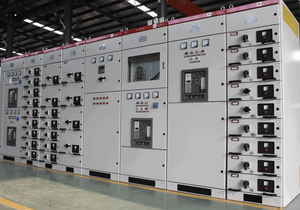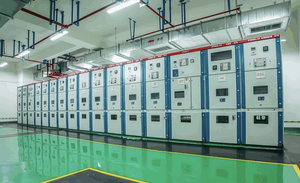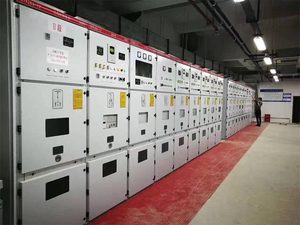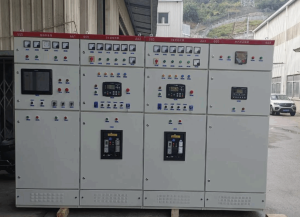
In high-voltage transmission and distribution systems, switchgear serves as core equipment to ensure stable grid operation, circuit switching control and fault protection. SF6 switchgear refers to high-voltage switchgear that utilises sulfur hexafluoride (SF6) gas as the insulating and arc-quenching medium. Featuring outstanding electrical performance, compact structural design and reliable operation, it is widely adopted in power transmission, power distribution, industrial high-voltage power supply, urban rail transit, new energy power stations and other scenarios. It stands as one of the most extensively applied types of switchgear for high-voltage and extra-high-voltage power systems. Compared with traditional air-insulated switchgear and vacuum switchgear, SF6 switchgear boasts unique strengths in adaptability to extreme operating conditions, short-circuit breaking capacity and equipment stability. Nevertheless, it faces industrial upgrading pressure due to environmental concerns, making it core equipment for research and application in the power and electrical sector.
1. What Is SF6 Switchgear
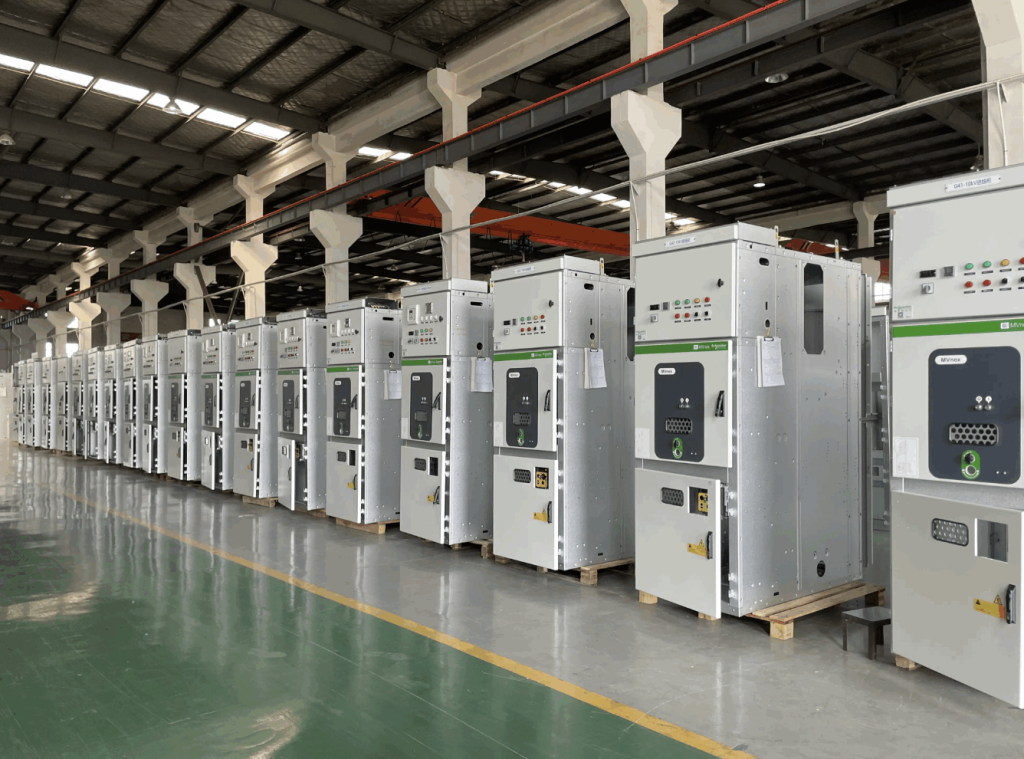
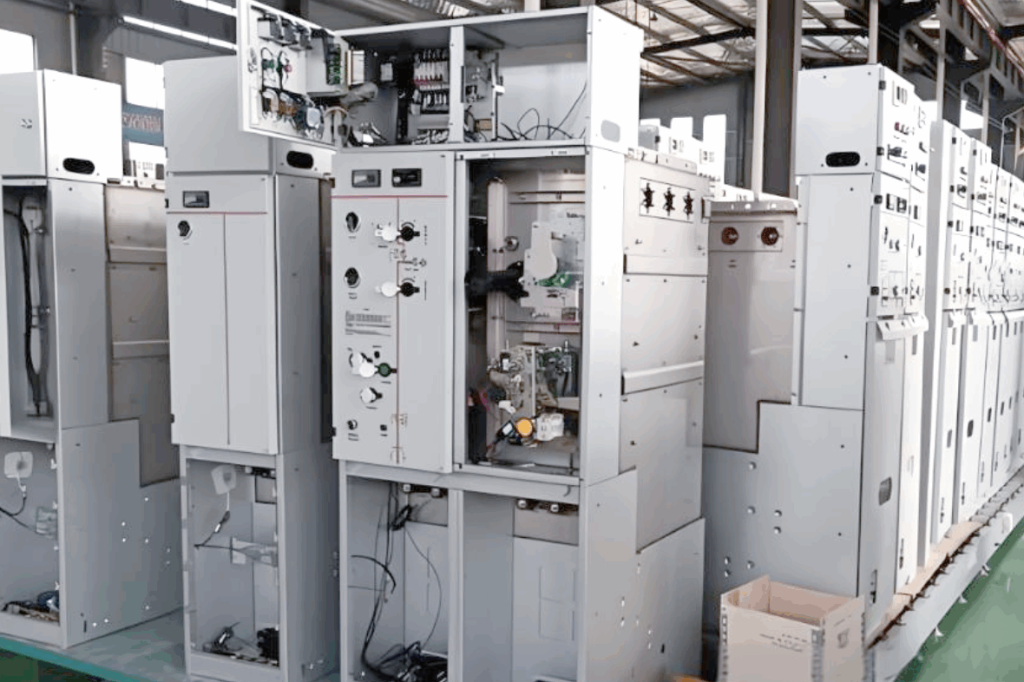
SF6 switchgear, fully named sulfur hexafluoride gas-insulated switchgear, is a complete set of high-voltage electrical equipment integrating circuit breakers, disconnectors, earthing switches, instrument transformers, busbars and other key electrical components inside sealed enclosures, with high-purity SF6 gas acting as the insulating and arc-extinguishing medium. Unlike conventional open-type switchgear, its core structure is fully sealed and immune to external environmental disturbances. It fulfils core functions including normal circuit switching, fault current interruption, line isolation and earthing protection, constituting fundamental infrastructure for power transmission and distribution systems.
SF6 gas is selected as the primary medium thanks to its distinctive physical and chemical properties. SF6 gas features strong electronegativity, enabling it to rapidly capture free electrons generated by electric arcs. Its dielectric strength is approximately three times that of air. In addition, it is chemically stable, non-flammable and free of oxidative corrosion, and can be recycled continuously within sealed equipment to guarantee secure and stable operation of switchgear.
Currently, SF6 switchgear covers power systems of all voltage classes. Major application scenarios include high-voltage distribution systems of various substations, long-distance high-voltage transmission lines, industrial high-voltage power supply systems for industrial and mining enterprises, power distribution systems for high-rise buildings, photovoltaic and wind power stations, and power supply systems for rail transit. It is particularly suitable for harsh outdoor operating conditions such as high altitude, heavy pollution, heavy rainfall and snow, and severe sandstorms, acting as critical support for stable power system operation in complex environments.
2. Working Principle of SF6 Switchgear
The operation of SF6 switchgear relies on the insulating and arc-quenching characteristics of SF6 gas. Its overall working mechanism consists of two core processes: insulation protection and arc extinction, supported by the pressure structure and operating mechanism to achieve reliable switching operations.
Under normal operating conditions, the sealed enclosure is filled with high-purity SF6 gas at rated pressure. Relying on the superior insulating performance of the gas, it isolates live conductors from the earthed housing and live components of different phases, preventing high-voltage leakage, phase-to-phase short circuits, earth breakdown and other faults to ensure insulation safety during regular operation. The interior is divided into multiple independent gas compartments by basin-type insulators, each equipped with an independent monitoring device to steadily maintain gas pressure and insulation performance.
During circuit opening operations, high-temperature electric arcs form the moment moving contacts separate from fixed contacts. High temperatures ionise gas and generate massive conductive particles, threatening circuit safety. Meanwhile, the internal pressure mechanism activates and compresses fresh SF6 gas, which sprays at high speed towards the arc zone. Thanks to the strong electronegativity of SF6, free electrons in the arc are quickly captured, the conductivity of the arc area drops sharply, and the rapid gas flow dissipates arc heat. The electric arc is extinguished within an extremely short period to block fault current.
The closing process is relatively straightforward. The operating mechanism drives precise contact closure, and SF6 gas inside the equipment quickly restores insulating performance to maintain stable circuit conduction. The entire arc quenching and insulation process takes place inside a closed system, where gas can be reused cyclically without waste gas emission or fire risks, meeting the demands of frequent switching, large current and high-voltage operations.
3. Classification of SF6 Switchgear
3.1 Classification by Voltage Level
Medium and low-voltage series (40.5kV and below): Mainly includes 10kV and 35kV SF6 switchgear, represented by ring main units and load switches. Compact and small-sized, they are widely used in urban distribution networks, industrial and mining enterprises, building power distribution, small substations and other terminal power distribution scenarios.
High-voltage series (40.5kV–252kV): Dominated by 110kV and 220kV equipment such as SF6 circuit breakers and compact GIS units. They are extensively deployed in regional substations, urban main power grids, medium-sized new energy power stations and other core power transmission scenarios.
Extra-high voltage series (above 252kV): Covers 330kV, 500kV, 750kV and 1000kV UHV equipment, mostly large-scale GIS combined electrical apparatus. It serves national backbone transmission networks, large hub substations and large wind & solar power bases.
3.2 Classification by Structural Form
GIS (Gas Insulated Switchgear): All high-voltage components are fully sealed inside metal enclosures. It delivers high integration, minimal footprint and strong anti-interference capacity. As mainstream equipment for high and extra-high voltage applications, it adapts to various harsh working conditions.
AIS (Air Insulated Switchgear) with SF6: The core arc-extinguishing unit adopts SF6 gas insulation, while busbars and other components are of open structure. Featuring simple construction and lower cost, it is commonly used in large outdoor substations with favourable ambient conditions.
Tank-type SF6 circuit breaker: Contacts and arc-extinguishing systems are integrated inside sealed metal tanks. It offers stable insulation performance and excellent seismic resistance, suitable for complex outdoor environments including high altitude, extreme cold and sandstorms.
Recommended Reading:
GIS Switchgear: Principles, Structure, Applications and Selection Guide
3.3 Classification by Application Function
It is mainly divided into three categories: SF6 load switches, SF6 circuit breakers and SF6 disconnectors. They are applied respectively for load current switching, short-circuit fault current interruption, and circuit isolation and earthing. The units can be used individually or assembled into complete sets.
4. Advantages and Disadvantages of SF6 Switchgear
4.1 Core Advantages
First, outstanding electrical performance. SF6 gas leads the industry in insulation and arc-quenching properties. The equipment boasts high breaking capacity and strong dielectric strength, meeting stringent requirements for UHV power transmission with negligible fire and explosion risks and superior operational safety.
Second, compact structure and strong adaptability. GIS and other integrated SF6 equipment occupy only roughly one-tenth of the land area required by conventional open-type equipment, significantly saving land resources for substations. It is especially suitable for power construction in city centres and land-scarce regions.
Third, exceptional environmental adaptability. The fully sealed structure completely isolates dust, moisture, acid and alkali corrosion, and extreme temperature fluctuations, enabling long-term stable operation under harsh conditions such as high altitude, severe cold, sandstorms and heavy pollution.
Fourth, stable operation and long service life. The equipment has low mechanical failure rates, long electrical endurance and extended maintenance intervals, supporting long-term trouble-free operation. It greatly reduces the risk of unexpected grid outages and guarantees continuity of power supply.
4.2 Main Drawbacks
First, high procurement and operation & maintenance costs. Precise manufacturing processes and high integration push up initial investment. In addition, professional instruments and qualified technicians are required for gas leakage detection, pressure calibration, gas recovery and other maintenance tasks, leading to higher long-term O&M expenses compared with conventional switchgear.
Second, environmental limitations. SF6 is recognised as a potent greenhouse gas with an extremely high Global Warming Potential (GWP). It can persist in the atmosphere for thousands of years once leaked, exacerbating the greenhouse effect and conflicting with global carbon neutrality targets.
Third, high professional requirements for maintenance. Detecting gas leakage, abnormal pressure, decomposed gas impurities and other defects is challenging. Operations rely on professional testing equipment and certified technicians, imposing strict requirements on the expertise of maintenance teams.
5. Comparison Between SF6 Switchgear and Vacuum Switchgear
5.1 Performance Comparison
Insulation and arc-quenching performance: Thanks to the special gaseous medium, SF6 switchgear achieves superior dielectric strength, faster arc extinction and higher large-current breaking capacity. It can be deployed for systems of 220kV and above, while vacuum switchgear is mainly applicable to 40.5kV and below medium & low-voltage scenarios with limited performance under high voltage.
Operational stability: The fully sealed structure of SF6 switchgear is unaffected by external dust, humidity and haze, resulting in extremely low failure rates. Vacuum switchgear is more susceptible to ambient interference, and its insulation stability slightly declines after long-term outdoor operation.
Operating endurance: SF6 switchgear can withstand more successive short-circuit current breaking operations and supports frequent switching, delivering longer electrical life for industrial and new energy scenarios with frequent start-stop cycles.
5.2 Cost and Maintenance Comparison
Equipment cost: For the same voltage class, SF6 switchgear has higher procurement costs due to high integration and complex manufacturing techniques. Vacuum switchgear features a simpler structure and lower price with obvious cost-performance advantages.
Maintenance cost: SF6 switchgear requires regular gas pressure inspection, leakage survey, gas recovery and purification, leading to complex maintenance workflows and high professional costs. Vacuum switchgear is nearly maintenance-free, requiring only routine visual and mechanical checks with minimal maintenance expenditure.
5.3 Differences in Scenario Adaptation
SF6 switchgear is preferred for high/extra-high voltage power transmission, compact substations in urban centres, harsh operating environments and frequent switching applications. Vacuum switchgear is more suitable for medium & low-voltage distribution networks, ordinary industrial and mining enterprises, civil building power distribution and other conventional scenarios.
6. Maintenance Specifications for SF6 Switchgear
6.1 Regular Maintenance Cycles
Daily inspection: Conduct visual examination, SF6 pressure reading verification and abnormal noise check every day to identify basic anomalies in a timely manner.
Annual maintenance: Carry out comprehensive air tightness testing, mechanical operation performance tests and insulation verification once per year.
Special overhaul: Perform in-depth overhaul after 8–10 years of operation, including gas recovery and purification, sealing component replacement and internal component inspection and maintenance.
6.2 Core Maintenance Activities
Gas leakage detection: Deploy professional leak detectors to comprehensively inspect flanges, sealing joints, valves and other leakage-prone positions. Leakage rates must be strictly controlled. Once leakage is detected, shut down the equipment for maintenance immediately and recover residual gas instead of direct atmospheric discharge.
Gas condition monitoring: Periodically test SF6 gas purity, moisture content and decomposition products. Filter and absorb moisture and impurities inside the gas to ensure insulation and arc-quenching performance meet standards.
Mechanical performance verification: Test contact opening/closing speed, operating mechanism flexibility and earthing reliability to eliminate hidden risks such as mechanical jamming and poor contact and guarantee accurate switching operations.
Fault troubleshooting: Establish standardised inspection procedures for common faults including abnormal pressure, operation failure, local overheating and abnormal noise to quickly locate risks and implement repairs.
6.3 Safe Operation Specifications
Maintenance work must be completed by certified professional personnel. Cut off power and implement earthing protection before operation. SF6 gas must be fully recovered and internal air ventilated before equipment opening for maintenance. Ambient gas concentration shall be monitored throughout operations to eliminate safety hazards and prevent gas pollution caused by leakage.
Frequently Asked Questions
What are the main applications of SF6 switchgear?
SF6 switchgear is applied in power transmission and distribution systems to realise normal circuit switching, short-circuit fault current interruption, line isolation and earthing protection. Widely used in substations, new energy power stations, industrial and mining enterprises and urban power grids, it serves as core equipment safeguarding safe and stable power system operation, covering medium-low voltage up to UHV voltage levels.
What is the typical service life of SF6 switchgear?
With standardised operation and regular maintenance, SF6 switchgear can operate reliably for 20–30 years. Its core insulation and arc-quenching components maintain stable performance, and only consumable parts such as seals and adsorbents need periodic replacement, outperforming traditional conventional switchgear.
Which is better: SF6 switchgear or vacuum switchgear?
Neither option holds absolute superiority; selection depends on application scenarios. SF6 switchgear with more stable performance is prioritised for high/extra-high voltage transmission, harsh operating environments, frequent switching and land-scarce projects. Vacuum switchgear offers higher cost efficiency, simpler maintenance and better environmental performance for conventional medium & low-voltage power distribution scenarios.
Conclusion
Benefiting from excellent insulation and arc-quenching performance, reliable operation and strong environmental adaptability, SF6 switchgear has long occupied a core position in the high-voltage power switchgear market and is indispensable for modern high-voltage transmission and distribution systems. However, its property as a potent greenhouse gas brings clear upgrading pressure under the global carbon neutrality initiative. At present, SF6 switchgear remains one of the optimal solutions for high-voltage power applications. Standardised maintenance and full-cycle gas recovery can effectively mitigate its environmental impact. In the long run, alongside the maturation of fluorine-free alternative technologies and intelligent solutions, low-carbon, intelligent and miniaturised design will become the major development trend of high-voltage switchgear, driving the power industry towards greener, low-carbon, safer and more efficient development.
For more information about switchgear, please contact Fuken. We will provide you with professional switchgear solutions.